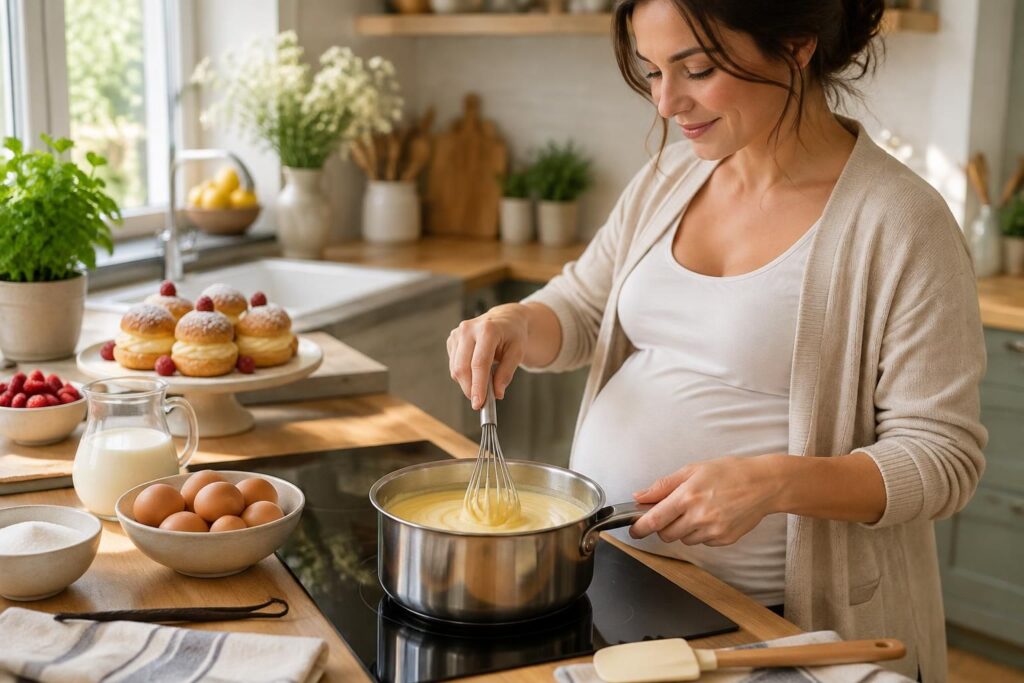
A strawberry tart, some cream puffs, or a simple spoon taken from the pot: pastry cream evokes a familiar treat, which pregnancy does not automatically forbid. The main point of caution concerns especially the cooking of eggs, the choice of milk, and the way the preparation is stored. Well cooked, made with pasteurized milk, and handled carefully, it can be part of a pregnancy diet without particular risk.
For Camille, who is preparing a dessert for an afternoon family snack, the recipe remains simple: a few pantry ingredients, thorough cooking, and a quick pass through the refrigerator. These actions matter more than a long list of prohibitions. A cream left on the countertop for several hours or made with raw eggs, however, should be avoided. Here are practical guidelines to prepare a pregnancy-adapted recipe, enjoy a treat while pregnant, and keep pleasure at the center of the table.
In short: pastry cream during pregnancy, the right reflexes
- Eggs must be well cooked: the cream must thicken and be brought to a boil according to the recipe.
- Choose pasteurized milk and fresh eggs with intact shells.
- Respect kitchen hygiene and avoid cross-contamination between raw ingredients and cooked cream.
- Cool the preparation quickly, then ensure its refrigerated storage.
- Exclude creams containing raw or undercooked eggs, especially some homemade preparations not heated.
Pastry cream during pregnancy: essential precautions
Classic pastry cream is made with egg yolks, milk, sugar, and a thickener such as starch. When cooked, the cream thickens and must be heated sufficiently: preparations with raw or lightly cooked eggs should be avoided during pregnancy due to the risk of foodborne infection.
To achieve even cooking, stir without stopping and bring the cream to a boil, following the recipe instructions. Use fresh eggs, clean and uncracked; wash your hands after handling them and clean the work surface. These simple actions enhance food safety without complicating the dessert.
Raw milk is not the best choice for this preparation during pregnancy: prefer pasteurized or sterilized milk. Camille can thus prepare her cream as usual, while keeping in mind the essentials: complete cooking, suitable ingredients, and clean handling.
Situations to avoid during pregnancy
Cooked pastry cream should not be confused with a dessert cream containing eggs added after cooking, or a homemade filling simply mixed without heat. When in doubt about a recipe or the cooking of a purchased dessert, it is better to ask the seller for its composition.
Also avoid tasting the preparation before it is cooked, then reusing a spoon that has touched a raw egg. Caution is not restrictive: it fits into everyday small actions, like changing utensils and quickly storing fresh foods.
Pregnancy-adapted recipe: a well-cooked pastry cream
This recipe yields about four servings. It relies on thorough cooking and simple products, for a cream to enjoy alone or to use in a homemade tart.
- 500 ml of pasteurized milk
- 4 fresh egg yolks
- 80 g of sugar
- 40 g of cornstarch
- One vanilla pod or a bit of vanilla extract
In a bowl, whisk the yolks with the sugar and starch until smooth. Heat the milk with the vanilla in a saucepan, then gradually pour it over the yolks while whisking.
Return everything to the saucepan and cook over medium heat, stirring constantly, until thickened. When the cream reaches a boil, continue cooking for about one minute while stirring: this step ensures a cooked and well-set cream. Pour it into a clean container before cooling it quickly.
How to recognize sufficient cooking?
The cream becomes noticeably thicker and forms bubbles on the surface when it boils. Keep whisking to prevent it from sticking to the bottom and to avoid unevenly heated spots.
If a kitchen thermometer is used, it can help verify the temperature, but the method of cooking until boiling remains the practical benchmark of this recipe. Well-cooked eggs and a homogeneous texture are the signs to look for; a cream still liquid or only lukewarm should not be considered ready.
Refrigerated storage: keeping the cream fresh
After cooking, do not let the cream cool for long at room temperature. Spread it in a clean, shallow container, place plastic wrap in contact with it to limit skin formation, then put it in the refrigerator as soon as it stops releasing a lot of steam.
Keep the refrigerator at 4 °C or lower and consume the preparation within 48 hours. Do not leave it on the table during the snack: serve the desired amount, then quickly return the rest to the cold. If the cream has stayed more than two hours at room temperature, it is safer not to keep it.
A handy tip: note the preparation date on the container. Camille can thus organize her dessert without wondering when the cream was made; freshness becomes easy to check.
Kitchen hygiene: three actions that make all the difference
- Wash your hands before cooking and after handling egg shells.
- Use clean utensils and keep raw ingredients away from already cooked cream.
- Cool the preparation quickly and respect refrigerated storage.
These pregnancy food safety precautions also protect the other dishes of the meal. A well-cooked cream can be contaminated after cooking if it touches a dirty utensil or stays long at room temperature: vigilance therefore continues until serving.
Pastry cream during pregnancy: quick guidelines depending on the situation
| Situation | Practical guideline |
|---|---|
| Homemade cooked cream | Possible if it is made with pasteurized milk, cooked to boiling, and handled properly. |
| Cream containing raw eggs | To avoid during pregnancy, as the eggs are not cooked. |
| Cream left on the table | Do not keep it if it has stayed more than two hours at room temperature. |
| Cream prepared in advance | Store in the refrigerator at 4 °C or below and consume within 48 hours. |
| Purchased dessert | Inquire about its composition and storage if the presence of raw eggs or the cold chain is unclear. |
These guidelines help choose without turning every dessert into a source of anxiety. In case of doubt about a product or if personalized medical advice has been given, consult a healthcare professional.
Pregnancy treat: enjoying with simple gestures
Well-prepared pastry cream can fill cream puffs, a fruit tart, or a sponge cake. For a risk-free dessert, also make sure that the fruits are carefully washed and that the filled cake stays cold until serving.
A pregnancy treat does not have to be complicated: a portion served just after a meal, freshly cooked cream, and well-chosen ingredients are enough to regain the pleasure of a homemade dessert. The right measure is a tasty recipe that goes hand in hand with pregnancy food safety precautions.
Can pastry cream be eaten during pregnancy?
Yes, if it is prepared with pasteurized milk, the eggs are well cooked, and the cream has been stored properly in the refrigerator.
Are the eggs in pastry cream cooked enough?
In a classic recipe, the cream should thicken and then reach boiling. Stir continuously and continue for about one minute after the first bubbles for even cooking.
How long can homemade pastry cream be stored during pregnancy?
Keep it in the refrigerator at 4 °C or lower and consume within 48 hours. Avoid leaving it more than two hours at room temperature.
Is purchased pastry cream a risk-free dessert?
It can be suitable if prepared with appropriate ingredients and stored properly. If in doubt about the presence of raw eggs or the cold chain, ask the seller for clarification.