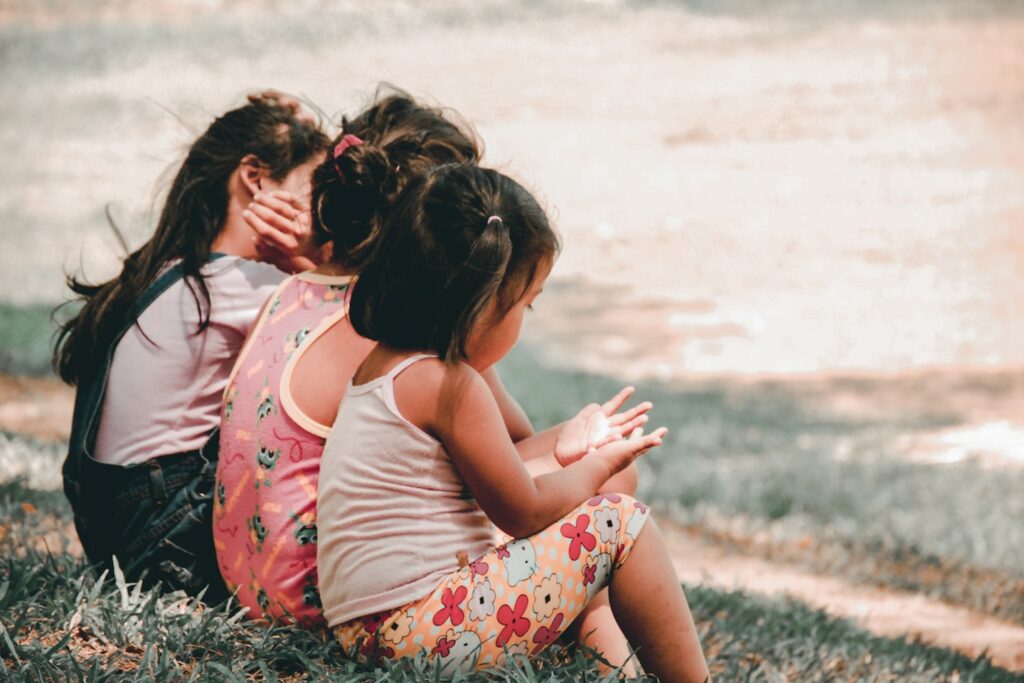
Discovering reading is a fascinating adventure that often opens up from a very young age. In real life, what I see with children is that this fundamental stage multiplies their curiosity, autonomy, and self-confidence. Learning to read is not just about becoming able to decipher words, it is also about diving into an entire universe where the imagination flourishes and where communication takes on a new dimension. Parents, educators, and close ones play an irreplaceable role by supporting each child according to their own pace, valuing efforts, and making reading accessible through playful and adapted methods.
From home, establishing an environment rich in family writings, such as books within reach, magazines, or a simple letter placed on the table, becomes a true springboard. Exchanges around stories, attentive listening to sounds and words, as well as educational games that promote the recognition of letters and sounds contribute to the gradual literacy of the child. Even better, these shared moments strengthen the emotional bond and allow to observe their progress while giving them the desire to delve more deeply into this discovery. Sensitive to the importance of joyful and gentle pedagogy, it is about prioritizing the pleasure of reading rather than mere performance, so that reading becomes a lifelong companion, a passport to all the worlds to come.
- 📚 Start early by encouraging first contact with sounds and images.
- 🎵 Develop phonological awareness through games, nursery rhymes, and songs.
- 🔠 Apply the syllabic method, recommended by experts and teachers.
- 🧩 Use playful and interactive materials to consolidate learning.
- 🌟 Encourage the pleasure of reading so that each child makes reading their own at their own pace.
Teaching your child to read: starting gently and simply
The very first interaction with reading can begin from the child’s first months. Even if a baby cannot decipher words, hearing sounds, listening to the reassuring voice of an adult reading, and looking at pictures are all precious steps. This awakening period helps stimulate curiosity and familiarize the child with the rhythm and structure of written language. For example, regularly reading a story like Kinou goes to daycare by Benjamin Leduc can help address common situations in toddlers’ lives while associating clear images with simple words.
Between 2-4 years old, choosing books with clearly visible letters and short words is crucial. Linking this reading moment with nursery rhymes or songs, and asking questions about illustrations, like “Where is the kitten?”, stimulates understanding and assimilation of words. In real life, what I see with children is a growing interest when readings are interactive. Reading is not a passive moment: it becomes an exchange between the child and the adult. These simple games gradually open the door to more structured learning.
Moreover, the Montessori method offers an accessible approach from 2 years old, combining manual activities with discovery of sounds and letters. Manipulating rough or movable letters allows the child to integrate the concepts concretely and sensorially. This tactile contact profoundly changes the relationship with writing, making acquisition natural and spontaneous. The book Montessori step by step – Writing, reading, and language by Vanessa Toinet and Sylvia Dorance offers excellent support to explore this path.

Understanding the importance of sounds: phonological awareness above all
Effective reading learning inevitably involves phonological awareness, the ability to recognize and manipulate the sounds that make up the language. This cognitive trait does not magically appear overnight: it is patiently built with simple but regular activities. Rhyming games, nursery rhymes, or hand clapping in rhythm with syllables thus constitute an ideal playground.
To help the child perceive these sounds, activities like:
- 🎶 Listening to and repeating songs and nursery rhymes promote auditory attention.
- 🔤 Identifying specific sounds at the beginning, middle, or end of words (for example: “in the word ‘cat’, do you hear the /ch/ sound?”).
- 👐 Clapping hands for each syllable pronounced in a word to understand sound decomposition.
- 🎲 Playing to find a word that rhymes with another.
These exercises require no special equipment and can be integrated into daily life, for example during trips or before bedtime. Pleasure and repetition are essential, as is patience. Those who want to go further can consult adapted resources on teaching your child to read to discover concrete and caring proposals that follow this fundamental principle.
Decoding letters with the syllabic method: a solid key to learning to read
When the child has acquired a satisfactory awareness of sounds, they are ready to move on to the stage of correspondence between sounds and letters (graphemes). The syllabic method, unanimously recommended by experts and integrated into schools, consists of a progressive learning where one starts by learning a few vowels and consonants, then their combination to form simple syllables.
Specifically:
- Learn the alphabet: Recognize letters by playing (with educational games, magnetic letters, etc.).
- Associate sounds with letters: Understand that “a” makes the /a/ sound, “m” makes /m/, etc.
- Form syllables: For example, combine “l” and “a” to say “la”.
- Assemble simple words: Combine several syllables to read words such as “mom”, “doudou”.
This method secures the child by giving them tools to read unknown words, unlike some methods that rely solely on whole-word memorization. Repetition and regular practice are indispensable to automate skills, and modern supports like the platform Scolibree now offer personalized support by following spaced repetition memorization.
Parents can embrace this principle to renew exercises at home by proposing variations, syllable games, or words adapted to the child’s age. This progression calms frustrations and builds confidence when the child deciphers their first words alone.
Promoting an environment conducive to the taste for reading and academic success
Beyond the simple technique, it is the pleasure that guarantees lasting success in learning to read. Creating a quiet reading corner at home, where the child can freely browse books, fosters this natural taste for writing. Reading a story together every evening becomes a comforting ritual and motivates progress.
Introducing several types of texts as soon as possible, such as signs, food packaging, or even small personal notes to read, offers a concrete and useful context for reading. Writing one’s name, forming letters with modeling clay, or drawing words are also playful ways to reinforce alphabet understanding and word recognition.
In case of difficulties, especially if the child shows symptoms of attention disorders or dyslexia, it is important to rely on specialized and adapted resources, such as those available on helping a dyslexic child or to improving concentration in children. Prompt and caring intervention from parents and professionals optimizes chances of success and educational fulfillment.
| 🌱 Key aspect | 🎯 Goal | 🎲 Examples of activities |
|---|---|---|
| Phonological awareness | Recognize sounds | Rhyming games, hand clapping in syllables, nursery rhymes |
| Letter/sound correspondence | Decipher syllables | Movable letters, educational games, reading simple words |
| Playful reading | Give the taste for reading | Family reading time, reading corner, interactive books |
| Support and encouragement | Build confidence | Valuing progress, small personal notes, exchanges |
Encourage independent reading while cultivating curiosity
Supporting a child is not only about teaching them to read by heart but also giving them keys so that reading becomes a personal pleasure and a tool for development. Inviting exploration of different literary genres – fantasy, historical, adventure – helps identify interests and enrich vocabulary and creativity.
In the community garden or reading corner, loud reading workshops or exchanges around a book encourage expression and dialogue. Creating a box for sweet or angry words, where the child writes or draws their emotions, also helps develop their relationship to writing in a playful and positive way.
Some ideas to try as a family:
- 📖 Create little stories together by writing one word each turn.
- 🎨 Combine drawing and reading by illustrating a well-known story.
- 🎉 Organize playful reading times with games around crosswords or riddles.
- 🌿 Invite your child to describe the surrounding nature through a small journal or observation notebook.
By multiplying these experiences, reading ceases to be a linear path and becomes a source of discoveries and shared emotions. This contributes to the harmonious development of the child while building a close relationship with family and school.
At what age should a child be introduced to reading?
It is recommended to start from the earliest age with stories to listen to, images to observe, then around 2-4 years old, integrate playful activities around letters and sounds.
What is the most recommended method to learn to read?
The syllabic method is widely recommended because it clearly teaches the correspondence between sounds and letters, making decoding easier.
How to encourage a child who is not very motivated to read?
Creating a rich environment, valuing every effort, offering readings adapted to their tastes, and limiting screen time encourage motivation.
What to do if a child shows reading difficulties?
Consulting a professional and using specialized resources is important. There are methods and aids adapted to children with disorders like dyslexia.
What educational games can help with learning to read?
Magnetic letter games, interactive books, educational applications, and phonetic activities through songs or nursery rhymes are particularly effective.