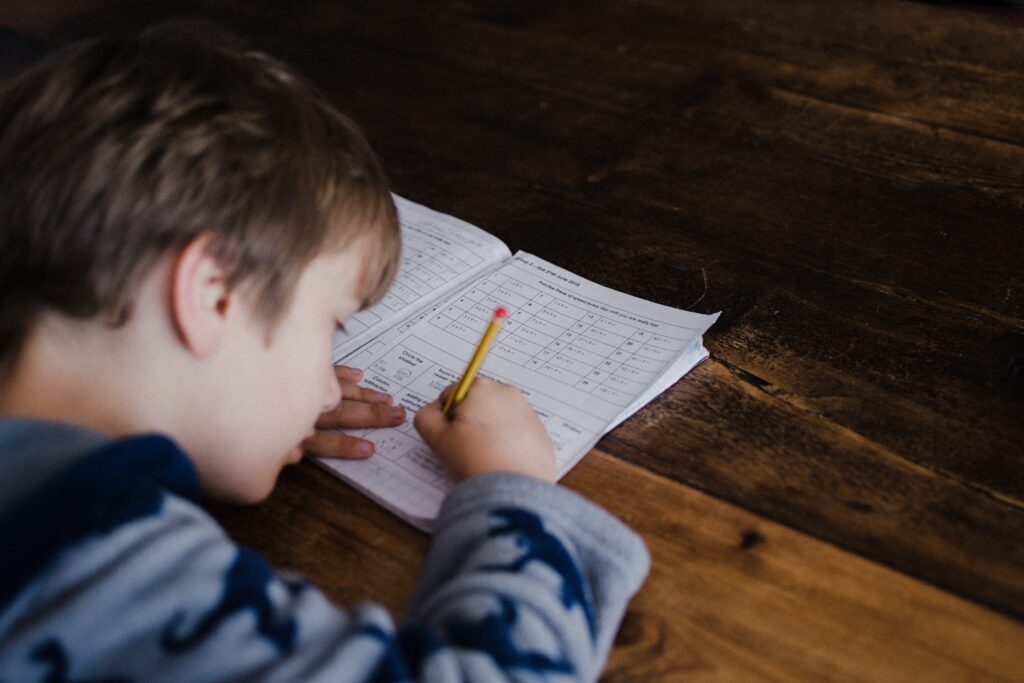
In a world where distractions are everywhere, it becomes essential for parents and educators to understand how to help a child concentrate effectively. Children today are often drawn to screens, ambient noises, or constant stimulation that fragment their attention. Yet, developing this attention ability is a crucial pillar for their academic success and personal fulfillment. Simple approaches, adapted to their age and temperament, help lay a solid foundation so that every child can grow calmly in an environment conducive to concentration.
This guide explores several essential facets: understanding the obstacles to children’s concentration, setting up a favorable workspace, integrating playful and progressive attention exercises, and finally, encouraging structured routines while keeping a child’s motivation stimulated. By combining these educational methods, it becomes possible to see real progress, provided patience and kindness are observed. Offering a child keys to better manage their attention allows them to gently appropriate their learning with confidence and autonomy.
Understanding the obstacles to concentration in children to act better
In children, attention management does not develop linearly. Several factors can hinder this ability, sometimes without those around noticing immediately. A fundamental challenge is detecting these obstacles to adapt the attention techniques to adopt.
Among the most frequent causes, fatigue holds a prominent place. A child who doesn’t sleep enough or has poor-quality sleep will naturally see their energy and child concentration drop. Establishing regular and soothing bedtime rituals prevents lack of rest from becoming a handicap. Depending on age, sleep durations should be strictly respected — for example, a primary school child will need about 10 to 12 hours of sleep each night.
Another notable obstacle is stress or anxiety, which can turn attention towards internal concerns rather than the task at hand. In this context, offering expressive activities, such as painting or creative workshops, can be a valuable outlet to channel emotions. One often effective tip: creating an “anger box” where the child can deposit frustrations in writing or drawing.
Nutrition also plays a crucial role in the ability to stay attentive. Favoring a balanced diet rich in omega-3s, proteins, and vitamins, while limiting quick sugars, supports brain function. Recent studies show that children regularly consuming foods that promote cognitive health achieve better classroom performance.
Finally, external distractions, notably the prevalence of screens, present a daily challenge. It is essential to establish clear rules on their use, especially during learning periods. During homework, prohibiting access to screens prevents attention dispersion and helps the child stay focused on their work. These rules can naturally fit into structured routines, providing a secure and predictable framework.
Creating a calm and organized environment to support children’s concentration
A calm environment is the essential backdrop for attentive work. When the space where a child operates is cluttered, noisy, or poorly adapted, it is natural that their gaze and mind drift away. Setting up a personalized work corner, designed with the child, encourages ownership and boosts motivation.
Here are some practical tips to organize this space:
- 🌟 Choose a quiet location, away from domestic or television noises.
- 🌟 Ensure natural or soft lighting to avoid visual fatigue. An adjustable intensity desk lamp can be a plus.
- 🌟 Limit unnecessary objects. A clean desk with the minimum necessary work tools helps reduce visual stimuli.
- 🌟 Adapt furniture and equipment to the child’s size for optimal comfort, notably an ergonomic chair and a height-adjustable desk.
- 🌟 Include one or two soothing objects such as a small plant, a soft cushion, or a sensory object (stress ball, modeling clay) which can be touched during short breaks.
The child’s participation in the setup adds significant value. For example, requesting a plant on the desk or choosing the rug’s colors can strengthen their sense of belonging to this sacred concentration space. In real life, creating these small cocoons enables the child to settle more serenely into their activities.
| Element 🔍 | To Favor ✅ | To Avoid ❌ |
|---|---|---|
| Noise 🎧 | Calm, soft music | TV, loud conversations |
| Light 💡 | Natural, dimmed | Too bright, flickering |
| Workspace 🖥️ | Organized, personalized | Cluttered, impersonal |
| Distractions 🎯 | Anti-stress objects | Screens, numerous toys |
A harmonious environment supports concentration effort and improves attention capacity over time. It is a simple and effective first step that perfectly complements concentration exercises to practice with children.
Adapted, playful, and progressive concentration exercises to strengthen attention
It is often said that a child’s brain is like a muscle: concentration can be trained and improved with targeted activities. Varying approaches helps maintain interest while developing patience and perseverance. Attention techniques integrated into games or creative activities then prove very effective.
Among the activities to prioritize are:
- 🧩 Puzzles and brainteasers that require observation and endurance.
- 🖍️ Drawing, coloring, or painting, which require sustained attention while stimulating creativity.
- 🧠 Memory games, such as “memory” card games or sequences to remember, to strengthen working memory.
- 🧘♂️ Guided meditation and breathing exercises, to learn to soothe the mind before schoolwork.
- 🎲 Board games, which develop concentration in a social and playful setting.
A small tip often seen working: organizing friendly “attention duration” contests, for example “who stays still the longest.” This playful idea helps raise awareness of one’s attention and stretch it little by little.
It is also important to alternate effort phases with regular breaks — 5 to 10 minutes every 20 to 30 minutes — to allow the child to recharge. For example, an active break (free dance, some stretches) renews motivation without energy loss.
Visual tools help make these moments more tangible and motivating: timers, check-box charts, or visual clocks indicating remaining time help structure the process. This approach empowers the child and directly involves them in their ability to stay focused.
Establishing structured routines and healthy lifestyle habits to support concentration
Beyond the environment and exercises, attention management relies on solid foundations in daily life. Structured routines provide the young one with a reassuring framework, and predictability and security thus promote easier mobilization of attention.
The primary pillar is sleep, which directly conditions vigilance and child motivation. A well-established bedtime routine with a regular bedtime, a calm ritual like reading a story without screens, lays the foundation. It is recommended to stop all blue light at least one hour before bedtime.
Carefully balanced nutrition also forms part of the foundation. Favoring foods rich in omega-3s, iron, and proteins ensures stable energy supply for the brain. Above all, avoid quick sugars that cause energy spikes and then drops, penalizing concentration.
Finally, regular physical activity is a precious ally. By spreading active playtimes throughout the day, nervous agitation accumulation is avoided, and the capacity to remain calm and attentive when needed improves. Short active breaks during homework, for example a few minutes of dance, can work wonders.
Here is a list of practical tips to remember for better concentration thanks to lifestyle:
- 🍎 Maintain regular sleep and meal schedules
- 🍎 Favor a diet rich in essential nutrients
- 🍎 Establish active breaks and relaxation moments
- 🍎 Avoid screens before and during study times
- 🍎 Create a daily rhythm with set times for each activity
Progress is measured little by little, the goal is to support without pressure while always valuing the efforts made. For more ideas adapted to your child’s age, you can discover activities for 3-year-old children or offer them stimulating indoor games like those presented on this site.
Motivating the child to stay focused: strengthening confidence and autonomy through positive methods
Finally, one must not underestimate the impact of child motivation in improving concentration. An encouraged child, valued for their efforts, will be more engaged and take pleasure in developing their attention capacity.
An effective method involves setting clear and realistic goals, broken down into accessible small steps, then celebrating each success with positive reinforcement. This can be a chart where completed tasks are noted, or simply regular verbal encouragements to highlight progress.
Involving the child in organizing their work gives them a sense of control over their learning, which increases motivation. For example, asking them to choose in what order they want to do their homework or select the tools they prefer.
These small responsibilities encourage the development of autonomy and perseverance, indispensable qualities to manage concentration beyond the family environment. A playful technique called “the small step method” involves starting with short tasks then gradually lengthening the concentration time, thus respecting the child’s natural rhythm.
In real life, guiding a child towards better attention often means finding together keys that please them, paths that suit them. If you want to deepen your knowledge about specific signs that may cause attention difficulties, it can be helpful to consult resources such as signs of ADHD in children, allowing even more tailored support.
What are the early signs of a concentration problem in a child?
Signs include persistent difficulty staying attentive, excessive restlessness, frequent forgetfulness, and an inability to complete tasks. Observing these behaviors over several weeks often justifies specialized follow-up.
How to establish an effective routine to improve concentration?
Creating a daily rhythm with fixed times for meals, sleep, homework, and playtimes fosters a reassuring framework, a condition essential for attention to develop.
What simple activities can be done at home to strengthen concentration?
Puzzles, memory games, breathing exercises, and guided meditation are playful and accessible activities that develop attention while being enjoyable to practice.
How to manage screens to avoid harming concentration?
It is advisable to establish clear rules limiting screen use, notably forbidding access during homework time and at least one hour before bedtime.
When should one consult a specialist in case of concentration disorders?
If difficulties persist, are significant, and impact learning or behavior, specialized advice is recommended to make a diagnosis and consider appropriate solutions.