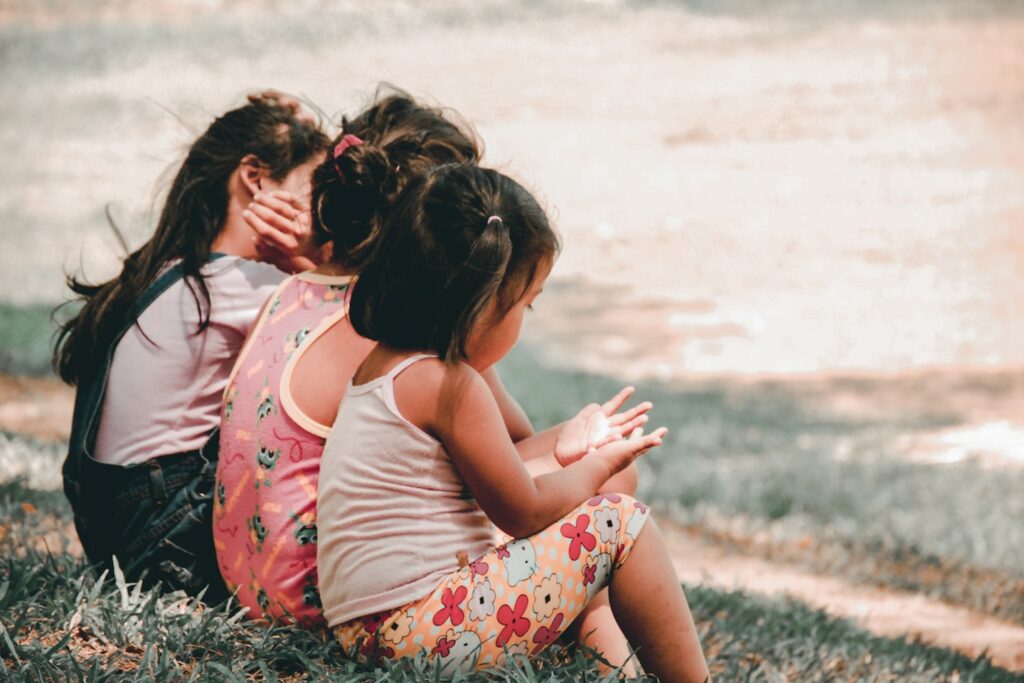
Supporting a child’s development is a rich and subtle adventure, combining attention, gentleness, and know-how. In a constantly evolving world, educational benchmarks adapt to better meet the specific needs of each child. Compassionate support promotes not only intellectual growth but also emotional balance and motor skills, essential elements for the harmonious construction of their personality. It involves creating a secure environment while stimulating curiosity and autonomy, inviting the child to grow at their own pace through rich interactions, stimulating activities, and respectful communication.
Based on solid educational approaches, such as those proposed by Jean Piaget and Lev Vygotsky, the role of parents and educators becomes that of facilitators in learning. They offer an environment conducive to cognitive, language, socio-emotional, and motor development while remaining attentive to the child’s evolving emotions and needs. This framework fosters overall well-being by valuing each stage of the child’s personal journey. Discover here practical keys and concrete examples to fully engage in this delicate mission with serenity and enthusiasm.
- 🌟 Understanding the stages of cognitive development according to Piaget and Vygotsky
- 🌟 Stimulating language, motor, and emotional skills according to age
- 🌟 Creating an autonomous and secure learning environment
- 🌟 Encouraging emotion management through compassionate tools
- 🌟 Helping socialization and strengthening self-confidence
Key stages of cognitive development and their implications for emotional and educational support
In real life, what we observe with children is that their cognitive development follows very specific stages, notably highlighted by Jean Piaget’s research. These stages help better understand the child’s abilities at a given time. From birth to about 2 years, the sensorimotor stage prevails. Here, the child explores their surroundings through their senses and movements. For example, an infant will discover different objects through the mouth or manipulation. This stage emphasizes the importance of rich but adapted sensory stimulation: varied textures, simple and colorful toys, imitation games like peekaboo are all effective means to support this development.
Between 2 and 7 years, the preoperational stage takes place. This is a phase where the child develops symbolic thinking and language, although their view of the world remains centered on themselves. Symbolic play, such as pretending to be a doctor or a cook, plays a fundamental role here. Support through verbalization, encouraging the child to describe their actions, and accompanying their language help reinforce their initial reasoning. This also corresponds to a period where creativity can fully express itself, notably with artistic activities to prepare in 5 minutes flat, such as sensory paintings or role-playing games.
From 7 years to preadolescence, the stage of concrete operations manifests. The child becomes capable of logical and structured thinking concerning concrete situations. It’s the ideal time to introduce strategy games, complex puzzles, and simple scientific experiments. These activities develop not only cognitive skills but also patience, concentration, and perseverance. They contribute to building a solid foundation for school learning and understanding the world.
Finally, around 11-12 years, formal thinking sets in. The child, or rather the preadolescent, is capable of abstract reasoning, hypotheses, and critical reflection. They appreciate longer-term projects: story creation, debates, complex artistic realizations. Supporting this stage with open dialogue, stimulating autonomy in task planning, is essential to strengthen confidence in their abilities.
Lev Vygotsky brings another essential dimension: that of social interaction at the heart of development. His notion of the “zone of proximal development” reminds us that a child progresses better with adjusted support, neither overly guided nor left on their own, but with appropriate assistance to overcome current limits. For example, an adult or an experienced peer can help the child accomplish a difficult task, enabling them to cross an important learning threshold. This approach also guides the way to stimulate development with kindness and pragmatism.
| 🌱 Development Stage | 🧠 Main Abilities | 🎯 Recommended Activities | 👩🏫 Adult’s Role |
|---|---|---|---|
| Sensorimotor (0-2 years) | Sensory exploration, object permanence | Tactile games, peekaboo, varied objects | Provide a secure environment, talk often, sing |
| Preoperational (2-7 years) | Developing language, symbolic play | Role-playing games, simple puzzles, sorting, creative arts | Encourage verbal expression, value creativity |
| Concrete operations (7-11 years) | Logical reasoning, problem solving | Chess, riddles, experiments, independent reading | Promote autonomy, introduce positive constraints |
| Formal operations (11-12 years) | Abstract thinking, hypothetical reasoning | Creative projects, debates, literary analysis | Stimulate open dialogue, support planning |
These benchmarks encourage designing progressive and respectful support of needs, adopting a posture of attentive listening, encouragement, and adapted stimulation. Each child follows a unique rhythm, and the support must be flexible, nourished by regular observations.
Emotional and social stimulation: concrete tools to foster emotional intelligence
Socio-emotional development is another cornerstone for effectively supporting a child. The ability to recognize, express, and regulate emotions facilitates the building of harmonious relationships and better adaptation to their environment. Parents as well as educators can help the child explore these dimensions from an early age with gentleness and method.
A remarkable technique is active listening. It involves giving full attention to what the child says, rephrasing their words to validate their feelings without judgment. For example, faced with a frustration crisis, an adult who responds: “You are really angry because you can’t do as you want, it’s normal” sets a secure framework where the child feels heard and understood. Such an approach reduces the intensity of negative emotions and establishes a climate of trust conducive to discussion.
Role-playing games are also valuable for developing empathy. By embodying different characters in various scenarios, children experience others’ points of view. A simple setup like “playing shopkeeper” or “pretending to be a friend” opens a space to explore feelings and motivations. This practice naturally stimulates social skills essential in everyday and school life.
Other tools, such as the Faber and Mazlish method, propose clear strategies to manage conflicts in a cooperative spirit. Instead of imposing order, recognizing the child’s feelings and offering an alternative promotes peaceful resolution of disagreements. For example, saying “I see that you prefer to play now, the room can wait, but afterwards we’ll tidy it together” values autonomy while setting respectful limits.
Mindfulness, adapted for the youngest, helps cultivate stress management and concentration. Simple exercises like “balloon breathing,” where the child visualizes their belly inflating and deflating, help calm the mind. This practice is accessible even to toddlers through illustrated books or guided games and proves to be a lasting asset for emotional regulation.
- 🎭 Role-playing games to experience emotions and viewpoints
- 🎧 Active listening to recognize and validate feelings
- 🤝 Nonviolent communication techniques to resolve conflicts
- 🌿 Mindfulness exercises to soothe and refocus
This socio-emotional dimension also supports overall development, as a child who feels accepted has more confidence to explore, learn, and create. In this context, support is not merely transmitting knowledge but becomes a co-construction with respect and kindness.
Supporting motor and sensory development: strategies and adapted activities
Motor development is not limited to simply walking or running: it also concerns coordination, balance, fine motor skills, and sensory perception. These aspects are essential as they influence the child’s ability to manipulate their environment and situate themselves in space. A child comfortable in their body is more confident to discover and learn.
For infants, it is a question of promoting free movement, a fundamental principle of the Pikler method. Letting baby explore on the floor, avoiding placing them in restrictive seats, offering mats with varied textures stimulates sensitivity and coordination without forcing. For example, a sensory mat combining soft fabrics, rough surfaces, and mobile objects encourages touch and spontaneous movements.
With toddlers, pouring activities with containers of different sizes, handled carefully, develop fine motor precision and gesture control. These simple exercises, to prepare in 5 minutes flat, also offer an opportunity to observe the child and communicate with them to strengthen communication and bonding.
As they grow older, it is necessary to expand the range of physical activities to improve flexibility, endurance, and overall coordination. Team sports, dance, or outdoor games like climbing trees encourage diversified motor skills. These experiences also contribute to calculated risk-taking, a source of autonomy and self-esteem in daily life.
A commonly used tip is to integrate movement into learning routines: for example, proposing memory games in motion or sorting activities while moving around the room. This not only strengthens motor skills but also attention, concentration, and memorization.
| 🏃♂️ Age Group | 🔧 Motor Activities | 🎯 Objectives | 🔑 Kind Tip |
|---|---|---|---|
| 0-2 years | Free movement, sensory mat, exploration | Gross coordination and fine motor skills | Respect the child’s pace, allow free exploration |
| 2-5 years | Pouring games, simple motor courses | Precision of gestures, balance | Use everyday objects, short and varied games |
| 5-10 years | Sports, dance, outdoor games | Endurance, flexibility, coordination | Favor free play and team spirit |
| 10-12 years | Complex physical activities, team sports | Strength, advanced coordination, socialization | Encourage autonomy and taking responsibility |
Moreover, to ensure comprehensive support, it is important to recall that parents can enrich their child’s development by introducing them to varied skills. In this respect, learning to swim from an early age is both a beneficial physical activity and an essential safety measure today. It also develops self-confidence and respect for rules.
Promoting language development: methods and practices for fulfilling communication
Language is the central pillar of communication and learning. It influences how the child understands the world, expresses needs, and builds relationships. Language development is accompanied by rich exposure to dialogue, reading, and dedicated games. Parents and educators play a key role by providing varied opportunities to listen, speak, and play with sounds, words, and sentences.
A highly appreciated method is interactive or dialogic reading. Rather than simply reading the text, it invites the child to comment, ask questions, predict what comes next, or imagine a different ending. This stimulates oral expression and enriches vocabulary. For example, by adapting this practice from early childhood, children are effectively prepared to become autonomous and curious readers, a crucial step often mentioned in reading learning resources.
Additionally, phonological games remain essential to prepare sound awareness necessary for reading. They include: rhyming games, syllable counting by clapping hands, or initial sound identification exercises in a series of objects. These playful practices integrate spontaneously into everyday life, including during trips or quiet moments.
The Montessori method complements these approaches with tactile and sensory activities such as using rough letters allowing discovery of sounds and writing gestures. This pedagogy offers a gentle and respectful alternative to the child’s pace, making them autonomous in their learning.
- 📚 Dialogic reading to stimulate expression and understanding
- 🔤 Phonological games to prepare for reading
- ✋ Rough letters according to Montessori for a sensory approach
- 🖍 Encourage free and creative writing from an early age
These combined approaches help build a solid foundation for smooth communication, a precious tool for academic and social success. It is also legitimate to be attentive to potential difficulties and consult experts if necessary.
Creating a stimulating and secure environment to encourage autonomous learning
The environment in which the child evolves remains a “third educator” after parents and teachers. Creating an adapted space is a key to stimulate curiosity, motor skills, and cognitive development. In a bright apartment overlooking a shared garden, one can observe how a setting rich in learning materials naturally encourages the child to explore without it being a command.
Accessibility is a fundamental first principle. Toys, books, and materials must be stored at child height, in easily accessible bins visually identified. This organization allows them to choose and use resources autonomously, which strengthens their confidence and motivation.
Variety and rotation of materials constitute another aspect to prioritize. Offering too many choices at once can scatter attention, while regularly renewing activities and objects maintains curiosity. For example, a creation box is updated weekly, moving from a set of modeling clay to natural elements like leaves or pebbles.
Dedicated zones for different activities (a cozy reading corner, a space for visual arts, a table for construction games) facilitate orientation and concentration. Integrating natural and sensory elements (plants, pebbles, fabrics of various textures) enriches sensory experiences and connection with the outside environment.
Involving the child in organizing their space has a positive effect on their sense of belonging and responsibility. Participating in tidying up, deciding the rotation of games develops their autonomy and respects them as an active participant in their learning.
- 🔓 Accessibility fostering autonomy
- 🔄 Toy and material rotation to maintain interest
- 📚 Dedicated zones to structure the space
- 🌿 Integrate nature and sensory elements in the environment
- 🤲 Involve the child in managing their space
The environment thought of as a living and evolving place proves a powerful lever for the journey that is child development. It highlights the central role of the adult who, far from prescribing, creates the conditions conducive to the emergence of a natural and lasting desire to learn.
How to identify the best moment to introduce a new activity?
It is important to observe the child’s spontaneous interest and current abilities. When an activity seems too simple or too difficult, it may discourage the child. The right moment is often within the zone of proximal development, where the child can succeed with a little help. Patience and flexibility are essential.
What are the signs of a difficulty in language development?
A delay in pronunciation, a very limited vocabulary for the age, or difficulty understanding simple instructions can be signs. In such cases, it is advisable to consult a speech therapist or a specialized professional for assessment and appropriate support.
How to manage an emotional crisis in a young child?
Prioritize active listening, naming emotions, offering a safe space, and allowing the child to express themselves without judgment are effective first steps. Using tools like a “calm-down box” or breathing techniques helps soothe the situation.
Which games are particularly effective to stimulate fine motor skills?
Activities such as manipulating modeling clay, pouring games, puzzles, or building with blocks are excellent. It is useful to vary textures and tools to encourage sensory exploration.
How to encourage autonomy in daily learning?
Providing an accessible environment, valuing the child’s initiatives, offering controlled choices, and accompanying without imposing are keys to strengthening autonomy. Including the child in routines and decisions related to their learning fosters responsibility.