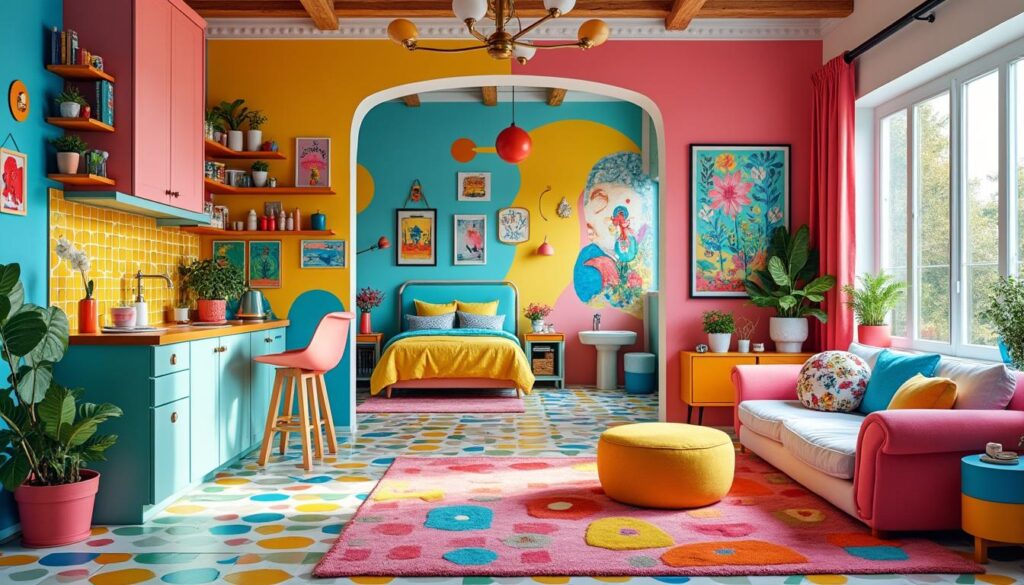
In the fascinating world of the home, each room becomes a unique expression space thanks to coloring, an activity that goes beyond a simple pastime to become a true lever of creativity and personalization. House coloring, accessible to all ages, invites revisiting the interior from a playful angle, blending art and design. Children, but also adults seeking gentle and inspiring moments, can thus make their living spaces their own by infusing them with unique touches that are both decorative and laden with emotion. Whether in the living room, bedroom, or kitchen, this activity stimulates imagination while developing fine motor skills and concentration capacity. While some choose realistic houses full of details, others unleash their inventiveness on abstract or thematic models, making coloring a real bridge between learning and pleasure.
This creative ritual can extend beyond the simple sheet, turning into collaborative projects such as creating a miniature village or personalized decorative objects. Parents and educators will find in this practice a gentle tool to encourage children’s development, strengthen their self-confidence, and enrich their vocabulary by naming colors, shapes, and architectural elements. By incorporating simple tips and suitable materials, each session becomes a rewarding break that harmonizes the interior around a warm and personalized atmosphere.
In short:
- House coloring: a playful channel to stimulate creativity for the whole family.
- Active learning: develops fine motor skills, concentration, and recognition of colors and shapes.
- Interior personalization: transforming rooms with unique artworks created at home.
- DIY projects: ideas to decorate and offer personalized gifts using colorful drawings.
- Materials and safety: advice on choosing suitable paper and non-toxic tools.
- Accessible resources: useful links to find printable coloring pages and diversify artistic activities.
The educational benefits of house coloring for each room
Beyond its creative dimension, house coloring acts as an exercise that mobilizes several essential skills for children’s development. By picking up a pencil or marker, the child sharpens hand-eye coordination, enlivens fine motor skills, and refines manual dexterity—assets necessary for precise gestures such as writing. Discovering colors by associating them with different elements of a house, like windows or the door, enriches their vocabulary and understanding of the surrounding world.
This activity also requires concentration and patience, fundamental qualities for academic success and daily life. Each little artist experiences the satisfaction of completing a work, which, when valued in a corner of the house, develops their self-esteem. Finally, by exploring various architectural forms, they acquire sensitivity to styles and design, which may inspire future passions.
Exploring styles and themes for all ages
House coloring models can be enjoyed according to the child’s desires and developmental stages. Realistic drawings depicting urban or rural houses encourage learning through observation with their carefully detailed features such as balconies or flowered gardens. Conversely, imaginary houses reveal enchanted universes, with castles and treehouses, stimulating storytelling and free creativity.
Including houses linked to well-known characters or popular holidays invites mixing art and culture. For example, coloring Mickey Mouse’s house or a house decorated for Christmas makes the activity playful while creating a strong emotional bond with the child. For an artistic challenge, minimalist houses invite experimenting with color palettes and discovering abstract design, cultivating a sense of aesthetics from an early age.
Creative ideas for personalized interior decoration with house coloring
Completed colorings are not limited to paper. A great idea is to assemble several colored houses to create a miniature village collaboratively. This collective activity combines cutting, gluing, and imagination, reinforcing team spirit and coordination. Laminated or framed drawings also add a touch of authenticity in the bedroom or even the living room, where a personal art gallery highlights effort and creativity.
On another note, giving cards or objects decorated with personalized colorings soothes the gift gesture, making it unique and meaningful. Organizing a coloring contest around a theme like “my dream house” can trigger enthusiasm and healthy competition among children. Collecting works in a personalized book helps preserve this artistic and emotional thread as a precious family memory.
Practices and materials: advice for an optimal experience
To make coloring a joyful moment, using quality paper, thick enough to support crayons and markers, avoids many frustrations. Adapting the drawing size according to age facilitates handling and encourages details. For the little ones, favor large and simple drawings to help build confidence, while older children will appreciate the complexity of shapes.
Finally, selecting non-toxic materials is an essential precaution for children’s safety. Parents will also benefit from regularly varying themes to maintain interest and aid self-expression. Concrete and free resources are available online, such as the coloring pages offered on City of Moms, which combine creativity and learning with ease.
DIY decor: integrating coloring into every room of the house
Coloring can become much more than a hobby: a true decorating project in its own right. In the living room, pendants or paintings made from children’s works bring life and character to the space. In the kitchen, table centers decorated with colorful patterns restore warmth and originality to these often functional rooms.
The bedroom is particularly suited to personalization with handcrafted objects, such as a hand-painted headboard or customized baskets. In the bathroom, small handmade storage made of natural materials, combined with colorful accessories, allows blending aesthetics and practicality. DIY supports an ecological and economical approach while encouraging family creativity.
Current materials and techniques for a harmonious finish
Natural materials such as wood, rattan, and linen are favored for their warmth and ease of harmonizing with a multitude of styles. Adding matte paint or patinas creates a soft atmosphere, while repositionable wallpaper offers a flexible and playful option for temporary projects.
Upcycling is also at the heart of trends in 2026: transform everyday objects into unique decorative accessories, for example with a kraft paper pot cover or a basket adorned with colorful pom-poms. These small personalized touches make all the difference, creating an interior that tells a story — yours.
Comparative table of house coloring ideas by age and room type
| Child’s age | Recommended coloring type | Suitable rooms of the house | Effects on creativity and learning |
|---|---|---|---|
| 2-4 years | Simple shapes, large houses with clear outlines | Bedroom, play area | Fine motor skills, color discovery, self-confidence |
| 5-7 years | Realistic houses with details, imaginary houses | Living room, bedroom, dining room | Observation, storytelling, patience, concentration |
| 8 years and up | Abstract houses, minimalist design, DIY projects | Living room, kitchen, bedroom | Artistic expression, experimentation, aesthetic sense |
How to adapt house coloring according to the child’s age?
For younger children, favor simple drawings with broad and less detailed shapes. Increase complexity and fine details with age by offering realistic or abstract houses to stimulate their creativity.
What materials to choose for safe and pleasant coloring?
It is advised to use thick drawing paper and non-toxic materials, such as colored pencils or markers suitable for children. Ensure safety to avoid any accidental ingestion.
How can house coloring contribute to the child’s development?
This activity improves fine motor skills, concentration, color and shape recognition, as well as creativity. It also promotes self-confidence when the child sees their creation valued in their environment.
Where to find free printable house coloring pages?
Several specialized sites offer free printable drawings, such as City of Moms, which provide a wide range adapted to different ages and tastes.
How to integrate coloring into interior decoration?
Works can be framed or transformed into decorative objects, such as gift cards or garlands. DIY allows creating a warm, personal, and authentic atmosphere in each room.


