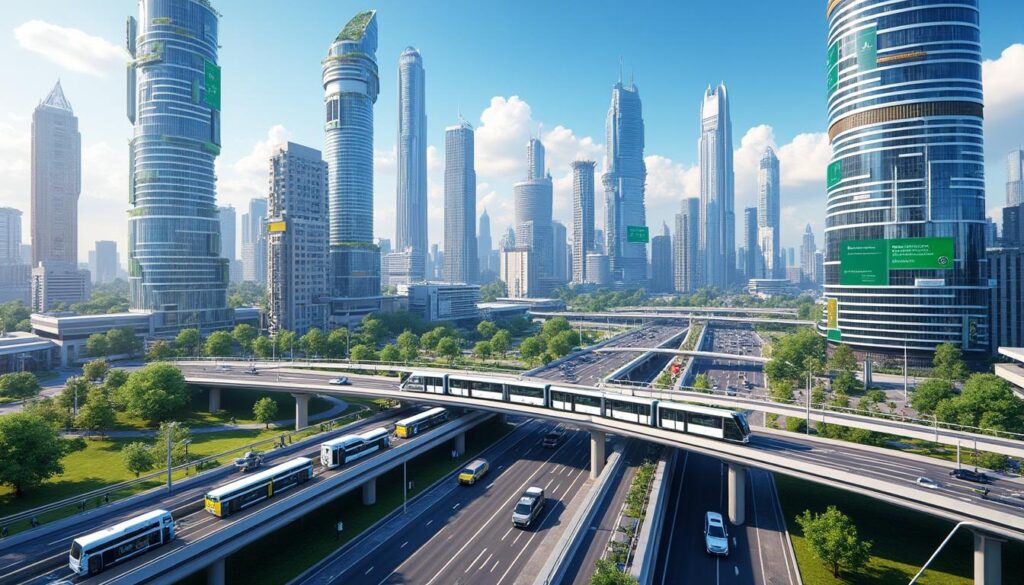
In 2026, city simulation experiences a new breath with Cities Skylines 2.0, a highly anticipated update that promises to meet the expectations of urban planning and city management enthusiasts. Far beyond a simple graphical improvement, this new version brings more refined planning tools, a dynamic economic system, as well as optimized management of infrastructures and resources. For fans, it represents a valuable opportunity to deepen their building strategies, taking into account not only the immediate needs of citizens but also current environmental challenges. By integrating improved public transport and a sustainable approach, Cities Skylines 2.0 fits into a global process that questions how cities develop.
This gameplay renewal invites nuanced reflection, at the crossroads between the delicate art of building and the finesse of managing economic and social fluctuations. It’s like in real life, where every decision made in a city has a ripple effect: a choice of infrastructure or transport directly impacts quality of life, attractiveness, or social cohesion. The new features introduced in this 2.0 version therefore resonate as keys to opening new doors to players’ creativity while confronting them with real and current challenges.
- A redesigned economic system that allows more precise management of budgets and service imports.
- Notable graphical enhancements offering an even more immersive and realistic visual experience.
- Refined urban planning granting access to tools facilitating neighborhood construction and development.
- Improved resource management and infrastructures, particularly for waste and energy.
- More diverse public transport adapted for optimized urban mobility.
A dynamic economic system for realistic urban management
The new update of Cities Skylines 2.0 marks a turning point by introducing a revisited economic model, which offers the player in-depth control over service imports and municipal budget management. The simulation no longer relies on static numbers: it now integrates financial fluctuations that reflect the challenges encountered in real life. For an educator or a parent faced with the need to budget a family project, this approach provides a concrete and playful illustration of financial responsibilities and their consequences.
Thanks to this realistic economy, the player must ensure balance between revenues and expenses, while anticipating the growing needs of their population. Attention paid to infrastructures – whether water, electricity, or waste disposal – becomes crucial: every decision influences the well-being of inhabitants and the city’s sustainability. A little tip for anyone starting in this game: focusing on early planning often helps avoid costly and stressful crises, both in the simulation and in real life!
Improved infrastructures and resource management
Urban management under Cities Skylines 2.0 is now based on a more complete and responsible vision, including efficient management of waste and energy resources. The objective is to encourage a more ecological reflection, essential in the current context. The player must juggle between construction, renovations, and maintenance, adapting to the evolving needs of inhabitants.
Like a workshop organized for children, where each material is carefully chosen to avoid waste, resource management in this game requires attention mixed with common sense and foresight. This ecological dimension enriches the simulation and invites better understanding of the necessary balance for the city to thrive while respecting the environment.
Urban planning and transportation: fluidity and innovation
Among the most appreciated new features, the improvement of public transport offers a new freedom to rethink urban mobility. Players can create more diversified networks: buses, trams, metros, and even more ecological alternatives that are crucial in modern and responsible management. These tools help avoid traffic jams, reduce pollution, and improve citizens’ comfort, with a fluidity that echoes real challenges faced in all major metropolitan areas.
As games progress, we notice how urban planning logic becomes more complex and invites deep reflection on how to imagine the city of tomorrow. This 2.0 version thus combines construction and flow management, two essential levers to create spaces where it is pleasant to live and evolve. A thought to keep in mind for all who love exploring simulation games, as well as professionals seeking a playful tool to test urban scenarios.
Graphical improvements and enhanced immersion
The visual aspect of Cities Skylines 2.0 also benefited from extensive touch-ups, offering stronger immersion thanks to reworked textures, more realistic natural lighting, and smoother animations. These details contribute to strengthen the player’s attachment to their creation, making every building decision more concrete, almost tangible.
In real life, what I observe with children during creative workshops is that it’s often the subtle details that trigger the desire to imagine and build. Here, the beauty of the recreated urban landscapes plays a similar role, offering a rich canvas on which to patiently build one’s city project. This version thus brings a true visual breath that invites players to extend game sessions with pleasure.
Urban planning tools accessible to everyone
Update 2.0 also eases the learning curve thanks to clearer and more intuitive interfaces for urban planning. Players, whether beginners or experienced, can thus organize their space with precision, easily modulating neighborhood construction and infrastructure management. This development work is comparable to a creative workshop where every element must find its place to inspire harmony and balance.
Going from dream to reality, even virtual, involves adapted educational tools. Here, the game’s ergonomics have been redesigned to offer gentle but comprehensive support that encourages experimentation and creativity. By adapting features based on needs, the game invites exploring different urbanism styles while promoting thoughtful resource management.
| Feature | Key Advantage | Impact on Urban Management |
|---|---|---|
| Dynamic economy | Precise budget management | Strengthened financial balance and crisis anticipation |
| Resource management | Ecological optimization | Waste reduction and better energy efficiency |
| Diversified public transport | Fluid and sustainable mobility | Improved comfort and reduced traffic jams |
| Intuitive interface | Ease of use for all | Accessible and creative urban planning |
| Graphical improvements | Visual immersion | Increased player engagement |
- Focus on public transport management from the start to avoid chronic traffic jams.
- Set up an emergency budget for economic unforeseen events, a useful practice both in the simulation and in real life.
- Experiment with different types of ecological infrastructures to discover their impact on residents’ quality of life.
- Use the urban planning tool to visualize the city’s different development phases.
- Take time to admire the graphical details to fully immerse in the game’s universe.
For those who wish to deepen their understanding of urban management or find inspiration for family projects, it is also interesting to discover concrete resources on parenting and playful activities, for example on how to create and manage a mini-city. This playful approach reminds us of how simulation games can also be valuable educational tools.
Finally, to complete this discovery, it will be useful to take a look at tips to locate a child’s phone, a topic that at first glance seems unrelated but joins the idea of better mastering and securing one’s environment, just as urban planning aims to organize and protect a city as best as possible.


