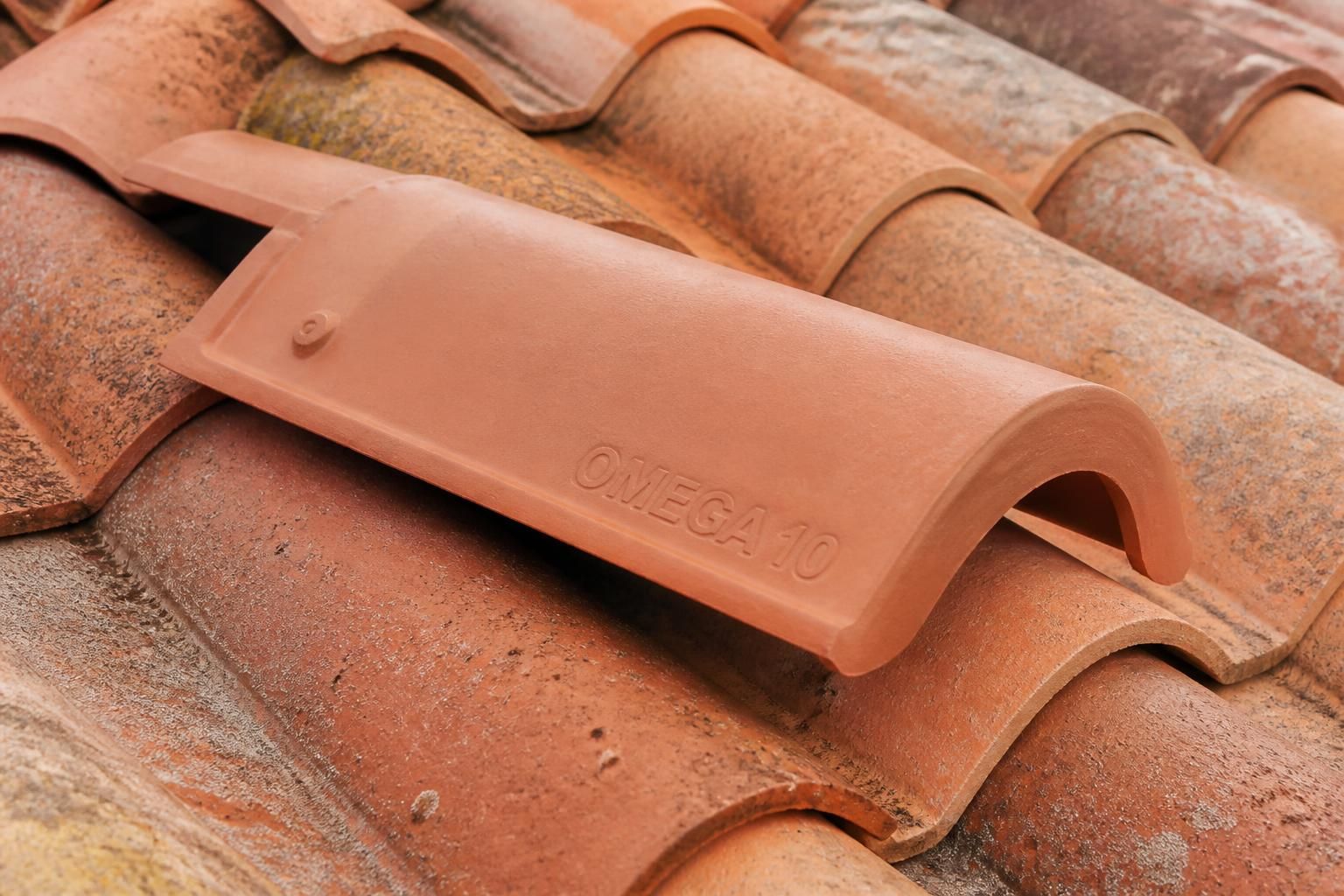
The Omega 10 tile, recognizable by its generous curve inspired by traditional canal tiles, continues to appeal to those looking for a roof that is both aesthetic and robust. Developed by Edilians, this large-mould terracotta tile is widely used in various regions, notably thanks to its industrial manufacturing offering consistency and proven performance. In 2026, its price remains attractive but varies depending on suppliers, shades, and chosen finishes. These price differences directly affect the total budget to be allocated for a roofing project, and it is essential to fully understand these variations before making a purchase.
Tile consumption per square meter, adjustable by setting the headlap, is a key factor that impacts the overall cost. Furthermore, the essential accessories for installation and the complexity of the job add to the estimate, highlighting the importance of precise costing from the outset. This balance between quality, aesthetics, technique, and budget reveals, in the end, a rewarding journey where every detail matters to ensure the durability and beauty of a roof.
Evaluation of Omega 10 tile price per m2 at specialized suppliers
In 2026, the unit price of the Omega 10 tile generally ranges between 3.2 and 3.8 euros depending on the shade and range selected. Classic red tones, less elaborate, are at the lower end of this range, while the “old roof” or aged finishes have a higher positioning. The price applied in trade and large DIY stores corresponds only to the supply of tiles, excluding delivery and accessories.
The consumption per square meter, varying between 10 and 11.7 tiles, depends on the chosen headlap, adjustable between 390 and 410 millimeters during installation. This variation leaves room to optimize both the roof’s aesthetic and the tile cost per m2. For example, a low consumption will give a price of about 32 euros per square meter for materials only, while a tighter headlap, although increasing the tile layer, will enhance waterproofing by raising this price to nearly 44 euros per square meter.
Comparative table of Omega 10 tile supplier prices
| Supplier | Unit price (€) | Consumption (tiles/m²) | Material cost per m² (€) | Available shades |
|---|---|---|---|---|
| Edilians (Quincieux & Ste Foy) | 3.20 – 3.50 | 10 – 11.7 | 32 – 41 | Red, nuanced red, straw, old roof |
| Grand Négoce Rhône-Alpes | 3.40 – 3.80 | 10 – 11.5 | 34 – 44 | Red, old roof, nuanced aged |
| Large DIY Stores | 3.30 – 3.70 | 10 – 11.7 | 33 – 43 | Standard, nuanced, straw |
What factors shape the total cost of installing the Omega 10 tile?
In real life, what many forget when estimating the roof tile price is the contribution of accessories and labor. Among the essentials, half-tiles for joints and half-headlap, socket tiles for conduit passages, as well as vents and ridge tiles play a major role in the finish and waterproofing.
These accessories, although secondary, add about 10 to 15% to the cost of tiles alone. For example, half-tiles range between 2 and 3 euros each, while socket tiles for ventilation can go up to 15 euros apiece. Installation by a specialized roofer often remains the most significant item, with a price generally between 40 and 80 euros per square meter depending on the complexity of the job and the region.
Just a few dormers or complex slopes can cause installation costs to fluctuate, a factor not to be underestimated when preparing a durable roofing investment.
The 4 key steps to accurately estimate your Omega 10 roofing budget
- Precisely measure the surface area and slope to determine the actual tile consumption based on the headlap.
- Choose the appropriate shade and finish adapted to the environment and urban planning constraints.
- Include the essential accessories (half-tiles, vents, ridge tiles…) in the estimate.
- Plan for professional installation and compare several roofer quotes to control the final budget.
Minimum slope and DTU rules: how they influence the price and installation of Omega 10 tiles
According to DTU 40-21, the minimum slope for an Omega 10 tile roof depends on the climatic zone, the building’s exposure, and the length of the roof slope. The requirement generally varies between 19 and 50%, with optimal conditions requiring a compliant underlay membrane for lower slopes.
Too shallow slopes may require an adjustment of the headlap, thus increasing tile consumption, which mechanically raises the cost of materials. In some cases, reinforced fastenings are also necessary, extending the duration and cost of the work.
This technical framework, often little known, deserves particular attention in the planning phase to avoid unpleasant surprises and budget overruns.
Palette of shades and finishes: choosing the Omega 10 tile according to your style
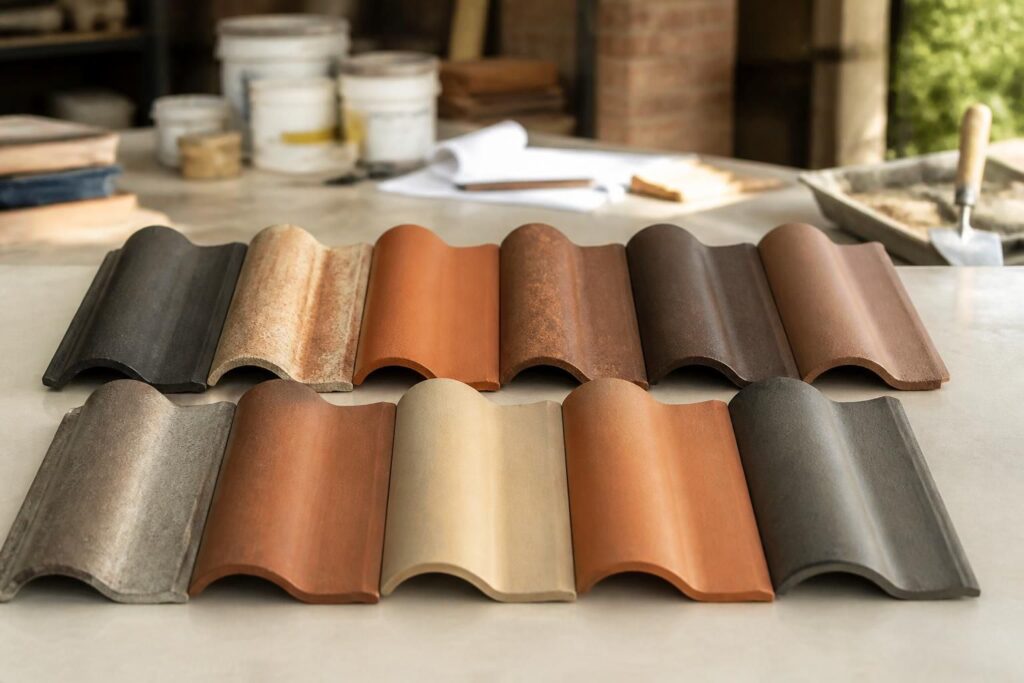
A quick glance at the Omega 10 tiles reveals a beautiful range of colors that match many regional architectures. The traditional red shade symbolizes warm ceramics, while the straw hues bring brightness and help maintain a pleasant temperature in the attic.
For those seeking to reproduce the elegance of old roofs, the “old roof” or aged finishes with patinated effects are among the most requested, their richly textured appearance telling a story on every roof plane. This variety allows everyone to adapt their choice to their environment while remaining compliant with PLU constraints.
Summary table of shades and possible uses
| Shade | Characteristics | Recommended regions and uses |
|---|---|---|
| Classic red | Natural firing, warm and uniform tone | Central, North, East |
| Nuanced red | Mixed tones, slightly “lively” appearance | Urban and suburban areas |
| Straw | Light shade, better reflects light | Southwest, sunny regions |
| Old roof / Nuanced aged | Patinated look, traditional effect | Old buildings, historic areas |
What is the average price of an Omega 10 tile?
The unit price generally ranges between 3.2 and 3.8 euros, corresponding to a material cost of about 32 to 44 euros per m² depending on tile consumption.
How to determine tile consumption per square meter?
Consumption depends on the headlap set between 390 and 410 mm. A shorter headlap requires more tiles per m², while a longer headlap reduces consumption.
What accessories are necessary for installation?
Half-tiles, socket tiles, vents, ridge tiles and edge tiles are essential to ensure waterproofing and a neat finish.
What budget to plan for professional installation?
Installation costs vary from 40 to 80 euros per square meter depending on the region and job complexity. This should be added to the material price to estimate the total cost.