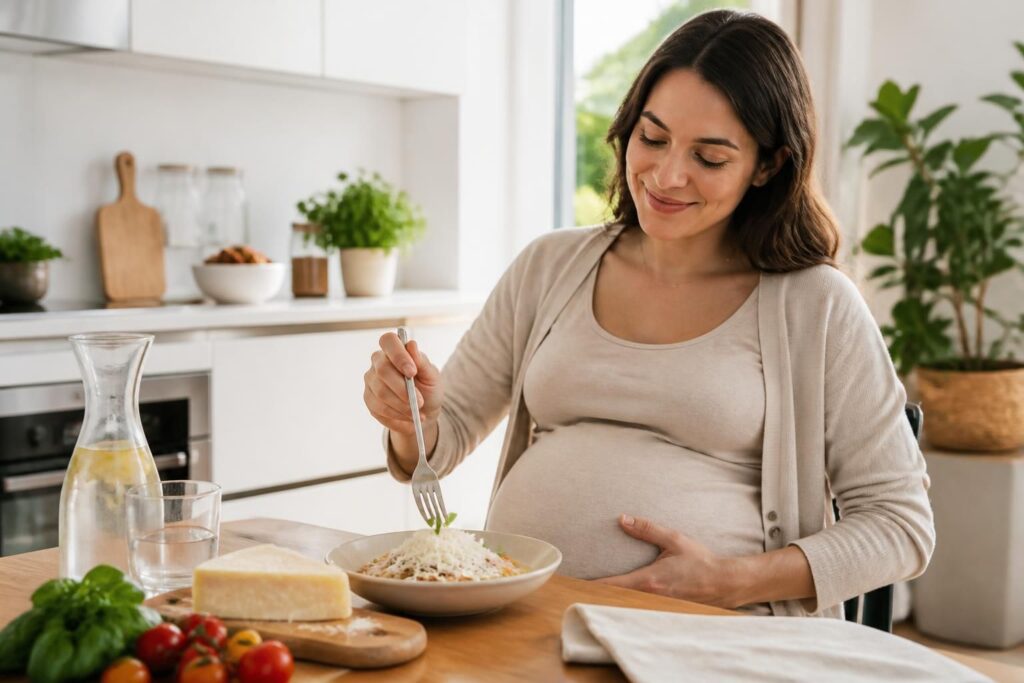
Parmesan, the iconic Italian cheese, captivates with its intense flavor and granular texture. For a pregnant woman, the gustatory pleasure is often accompanied by a degree of caution, particularly regarding the risks associated with certain cheeses. The consumption of parmesan during pregnancy naturally raises questions about its food safety. Is it possible to bite into this piece of happiness without fearing listeria, a bacterium to be absolutely avoided during this period? In 2026, expert recommendations are reassuring: thanks to its long aging and low humidity, parmesan stands out as a safe and nutritious ally. It is enough to adopt a few good practices to fully enjoy its benefits, while providing the expectant mother with valuable nutritional support. This delicate period, full of changes, can then be experienced with pleasure and serenity, where indulgence does not equate to risk.
- Food safety: extended aging and a low humidity rate make parmesan unlikely to harbor listeria.
- Nutritional benefits: rich in calcium, proteins, and vitamins, parmesan supports baby’s growth.
- Practical advice: prefer whole parmesan, store it in a cool place, and remove the rind before consumption.
- Delicious recipes: risottos, salads, or gratins, tasty ideas adapted to pregnancy.
Pregnant with parmesan: a hard cheese, a reassuring choice during pregnancy
In real life, discussions about cheese during pregnancy often raise concerns, especially due to the risk of contamination by the bacterium Listeria monocytogenes. However, parmesan stands out clearly from soft cheeses, which are often discouraged. Its production, based on raw milk but with long aging ranging between 12 and 36 months, leads to a significant loss of moisture, generally under 32%. This dry character, combined with high saltiness, creates an environment unfavorable to the survival of pathogenic bacteria.
This is why this Italian cheese, often labeled PDO (Protected Designation of Origin), enjoys an excellent reputation in terms of food safety, provided that its storage is rigorous. For example, a fresh slice stored in the refrigerator, at a temperature between 0 °C and 4 °C, and protected from humidity, helps limit any health risk. Thus, in a salad or on a hot dish, parmesan can be enjoyed without worry by the expectant mother.
Essential comparison: parmesan versus soft cheeses
| Characteristic | Soft cheeses | Parmesan |
|---|---|---|
| Humidity | 40–60 % | About 30 % |
| Aging duration | 2–4 weeks | 12–36 months |
| Risk of Listeria | High | Very low |
| Consumption during pregnancy | Not recommended | Allowed |
Parmesan, a true nutritional treasure for the pregnant woman
When the body prepares to welcome a new life, nutrient needs become essential. Parmesan, thanks to its rich profile, meets several of these key requirements. For only 30 grams, it offers a formidable dose of calcium, providing 33% of daily needs. This mineral plays a crucial role in the formation of the fetus’s bones and teeth.
With 11 grams of protein, parmesan also supports tissue development, while vitamin A and zinc contribute to the strengthening of the immune system and cellular synthesis. These specific intakes are a real resource in the diet of the pregnant woman.
| Nutrient | Amount per 30 g | % Recommended Daily Intake |
|---|---|---|
| Calcium | 330 mg | 33 % |
| Proteins | 11 g | 22 % |
| Vitamin A | 150 µg | 19 % |
| Zinc | 2.7 mg | 30 % |
Quick ideas to incorporate parmesan into pregnancy menus
- Creamy risotto: incorporate 15 g of grated parmesan off the heat to preserve its nutritional qualities.
- Warm salad: sprinkle 10 g in shavings on roasted vegetables or spinach shoots for a crunchy touch.
- Vegetable velouté: blend 20 g of parmesan after cooking for a smooth and tasty texture.
- Light gratin: sprinkle 25 g of parmesan mixed with fine breadcrumbs, perfectly gratinated.
Adopting these little kitchen tips allows diversifying one’s diet without complexity while fully enjoying this much-loved cheese.
Risk-free consumption: practical advice for pregnant women
Vigilance remains the best ally to ensure parmesan tasting is done with complete peace of mind. A PDO parmesan or one made from pasteurized milk is preferred, even though raw milk parmesan aged more than 12 months remains a safe choice.
Storage in a cool place, between 0 °C and 4 °C, as well as airtight packaging, are essential. It is advised to avoid industrial grated cheeses that have been open for a long time, as they may present increased risk. Prefer grating parmesan yourself just before consuming to guarantee optimal freshness.
- Store parmesan in the vegetable drawer of the refrigerator, protected from light and humidity.
- Use clean utensils for cutting or grating to avoid any cross-contamination.
- Consume opened pieces quickly (maximum 3 to 4 days).
- Remove the rind before tasting, as it may contain bacteria.
Forms of parmesan: how to choose the most suitable?
| Form | Advantages | Disadvantages |
|---|---|---|
| Shavings | Thanks to their presentation, limit prolonged contact with air, preserve freshness | Slightly higher cost |
| Industrial grated | Convenient and quick | Limited shelf life, loss of aroma, increased risk of contamination |
| Whole pieces | Better preservation, intact flavors, possibility to grate as needed | Takes a bit of time to cut |
The best option remains to buy a whole piece of parmesan and grate it gradually, a simple gesture that ensures freshness and safety for pregnancy.
Frequently asked questions about parmesan and pregnancy
Is raw milk parmesan safe for pregnant women?
Yes, thanks to its long aging of a minimum of twelve months and its low humidity rate, parmesan greatly limits bacterial risks. Prefer a PDO product to guarantee quality.
Can you eat parmesan with deli meats during pregnancy?
It is preferable to ensure that the deli meats are pasteurized and well preserved. Avoid mixing the two products without precautions, as this could increase risks.
How much parmesan should be consumed during pregnancy?
Between 10 and 20 grams per day is sufficient to benefit from nutritional intakes without excess salt or fats.
How to check the freshness of industrial grated parmesan?
Check the expiration date, absence of visible mold, and always store it in an airtight container protected from humidity and light.
Is melted parmesan safe during pregnancy?
Yes, cooking effectively destroys bacteria such as listeria. Dishes like gratin or parmesan risotto are safe.