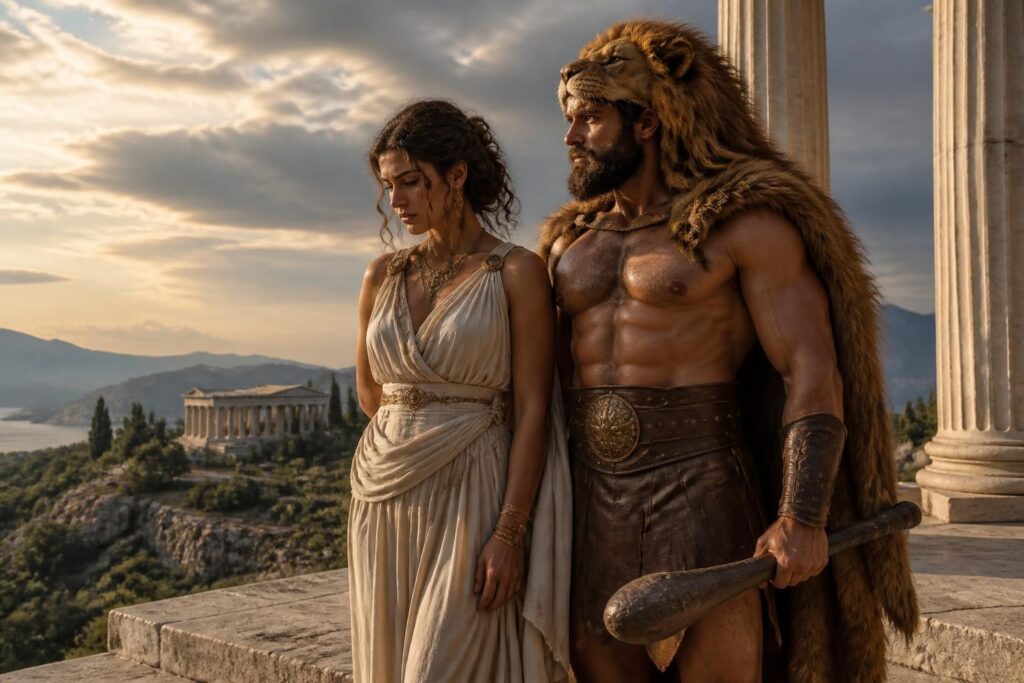
Dive into the fascinating world of Greek mythology by discovering the complex story of Megara, daughter of King Creon of Thebes and wife of Heracles, better known as Hercules. This female figure blends honor, tragedy, and family drama, revealing the deep ties between the legendary hero and his tormented destiny. In a context marked by the Theban war and dynastic struggles, the union with Megara, granted as a reward to Hercules for his bravery, lays the foundations of a story as beautiful as it is painful. Through ancient tales, the madness of Hercules strikes this couple, leading to tragic events that have forever marked the ancient myths.
Megara’s journey allows for a better understanding of the human and vulnerable aspect of Hercules, torn between his heroic exploits and divine curses. This deep connection between the characters highlights the richness and complexity of Greek legends, while bringing an emotional touch accessible to all. By revisiting these stories, we also explore issues of family loyalty, power, and the consequences of tragedies played out in the shadow of heroic feats.
In brief:
- Megara is the eldest daughter of King Creon of Thebes, given in marriage to Hercules as a reward for his victory against the Minyans of Orchomenus.
- Their union, though strong, is marked by a great tragedy linked to the madness of Hercules caused by the goddess Hera, leading to the death of their children, and sometimes, according to versions, to that of Megara.
- Hercules, after this family tragedy, is imposed by the oracle of Delphi a penance: the twelve labors, which forge his legend.
- According to some accounts, Megara is entrusted to Hercules’ nephew, Iolaus, after the tragedy, illustrating the painful choices related to survival and power in Thebes.
- The myth reveals profound tensions between family duty, tragic fate, and divine intervention, enriching the pantheon of great Greek legends.
The role of Megara in Greek mythology: daughter of Creon and wife of Hercules
Megara, in ancient traditions, is the first wife of Heracles, a hero with an extraordinary destiny. Eldest daughter of King Creon of Thebes, she is given in marriage to Hercules as a token of gratitude after the defeat of Erginos, king of the Minyans of Orchomenus, who imposed a heavy tribute on the city of Thebes. This political and family alliance highlights the central place of marriages in the construction of power relations in ancient Greek cities.
In real life, what is perceived through this myth is above all the weight of responsibilities and sacrifices linked to Megara’s position. She embodies the link between royalty and heroism, but also the vulnerability of a woman caught in the turmoil of larger events. Her marriage to Hercules leads to the arrival of several children who, in legend, are a promise of offspring but also a source of immense pain.
Megara and Hercules’ children: a variable number depending on sources
Ancient stories differ on the exact number of children Megara had with Hercules. According to Theban tradition, they had up to eight sons, some bearing names such as Therimachos, Deicoon, and Creontiades. Euripides, the renowned playwright, only mentions three, probably for dramatic reasons in his work “The Madness of Heracles”.
This varying count reflects the richness of interpretations of ancient myths. These children, called the Chalkoarai by the Thebans, are nonetheless tragic victims of the madness of Hercules caused by Hera, marking the hero’s devastating rupture with his family.
Tragedy and madness: Hera’s impact on the fate of Megara and Hercules
When examining Megara’s fate, it is impossible to separate her story from the cruel role played by the goddess Hera. Jealous of Hercules’ exploits, she strikes him with a furious madness that leads him to kill his own wife and children. This tragic episode, highlighting human fragility even in legendary heroes, is at the heart of the stories. It reminds us that divine fate intertwines with mortal life, without concession.
A little tip I often use to better help children understand this tragedy: approach the theme of anger and unleashed emotions through an anger box or a role-playing game. This helps to gently and realistically evoke what characters might feel when faced with loss and uncontrolled violence.
Variations of the myth: Megara after the tragedy
According to some versions, Megara was killed by Hercules in his fit of madness, but other traditions give her a different fate. In these stories, unable to bear the pain associated with her family, Hercules entrusts Megara to his nephew Iolaus, a gesture that allows for a form of survival and continuity despite the internal rupture the hero undergoes.
This narrative choice offers a rich perspective on the transformation of family ties in the face of suffering, but above all on the need for a new path when the shadow of tragedy looms. A nod to the idea that even in dark moments, it is possible to find solutions that respect dignity and life.
Table: Key characters around Megara and Hercules
| Character | Role | Relations |
|---|---|---|
| Megara | Daughter of King Creon, wife of Hercules | Mother of several of Hercules’ children |
| Hercules (Heracles) | Greek hero, husband of Megara | Father of children with Megara, influenced by Hera |
| Creon | King of Thebes, father of Megara | Gives his daughter in marriage to Hercules |
| Hera | Jealous goddess, cause of Hercules’ madness | Opponent of Hercules |
| Iolaus | Hercules’ nephew, possible remarriage of Megara | Faithful ally of Hercules |
Links between Megara and the great ancient myths of Hercules
Megara’s fate is intimately linked to Hercules’ great ordeals, notably the twelve labors imposed by the oracle of Delphi after the family tragedy. This crucial stage for the hero illustrates the notion of redemption and purification through effort, a recurring theme in Greek mythology.
In real life with children, evoking these stories can be done by emphasizing notions of courage in the face of adversity and self-overcoming, rather than the solely dramatic aspect. It can become a starting point for creative activities where children imagine their own hero, going through ordeals and finding solutions.
A short list to better understand Megara’s place in the hero’s story
- Political reward: Megara seals the alliance between Hercules and King Creon.
- Maternal figure: She is the origin of an offspring, source of the Theban dynasty.
- Tragic victim: Hercules’ madness leads to the loss of her children.
- Symbol of transition: Her possible remarriage to Iolaus opens a new family chapter.
- Starting point of the labors: The family tragedy precipitates Hercules’ heroic journey.
Who was Megara in Greek mythology?
Megara was the daughter of King Creon of Thebes and the first wife of Hercules, with whom she had several children. She plays a central role in the tragedy linked to Hercules’ madness.
Why did Hercules’ madness lead to a tragedy?
Hera, jealous of Hercules’ exploits, struck him with violent madness that pushed him to kill his children and sometimes his wife, which caused a great family tragedy.
What happened to Megara after Hercules’ madness?
According to versions, Megara was either killed by Hercules or entrusted to his nephew Iolaus, who married her, thus ensuring her survival after the tragedy.
How many children did Megara have with Hercules?
Stories vary between three and eight children, according to traditions, bearing names like Therimachos, Deicoon, and Creontiades.
What is the link between Megara and Hercules’ twelve labors?
The family tragedy with Megara and their children leads Hercules to redemption through the twelve labors imposed by the oracle of Delphi.