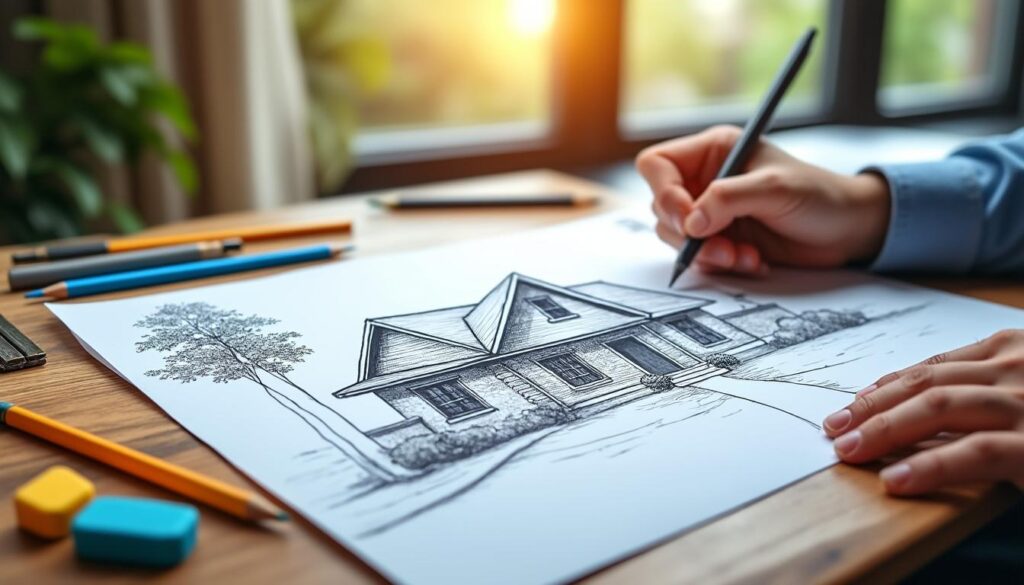
In real life, what I often see with children is a mix of enthusiasm and challenges when they draw their first house. Drawing a house can seem intimidating, but with a few affordable and well-thought-out techniques, it becomes child’s play. Whether it is an easy house to draw, a simple rectangle topped with a triangular roof, or a small creation rich in details, it is important to approach this activity with lightness and patience. No pressure, just fun at every step. The secret? Simple drawing tips to quickly draw a house, without stress, while letting creativity flow freely.
Finding the right method is not just a matter of artistic skills; it is also a way to help the child understand shapes and proportions, while developing their confidence. Between house drawing tricks and clear steps to follow, creating a house drawing step by step offers a reassuring framework. By adapting the advice according to the child’s age and energy level of the day, this moment turns into a joyful and constructive break—a true gift for the whole family.
Easy house to draw: simple steps for beginners and children
To learn how to draw a house, simplicity is a precious asset. Start by drawing a rectangle that will be the base of the walls, then add a triangle for the roof, which stands out as the main and easily recognizable element. This easy house drawing technique offers an accessible framework for toddlers and beginners, enhanced with optional elements: a door, two windows, a chimney, or even a fence. By proposing this basic structure, it facilitates the understanding of geometric shapes and the mastery of the gesture.
In a creative workshop, for example, a little trick I often use is to allow children to freely choose their colors to paint their house. This freedom colors not only the drawing but also their enthusiasm. Here is how to organize the steps:
- Draw the rectangle for the body of the house
- Draw a triangle above for the roof
- Add a simple door and square or round windows
- Attach a chimney or some clouds in the sky
- Finish with colors then imagine the scenery around
You can discover a creative activity for children that complements this and stimulates their creativity while teaching them the basic method. And if you want to accompany this work with creative gift ideas, take a look at the proposals for original gifts for little girls suited to this age group.
House drawing techniques: details that enhance without complicating
Once the basic structure is set, it’s time to add some details that bring the drawing to life without making it too complex. For example, drawing a circular window on the roof or sketching small bricks on the walls gives the house depth without multiplying difficulties. Thinking of a door with a simple handle or a small step under the door also easily adds volume.
In workshops, a memorable moment often is when children decorate their house with a sun or some trees. These touches add a narrative dimension to the drawing and release emotions. To support this step with children, it is essential to value every attempt, even imperfect, to encourage self-confidence and stress-free drawing enjoyment.
Draw a house quickly: tips for a successful result in a few minutes
Are you looking to draw a house quickly while maintaining a beautiful result? The secret lies in repeating simple steps and using accessible tools like a pencil to start, then a marker to retrace the outlines, and finally colored pencils or markers to fill in the colors. This progressive approach makes work easier without pressure. A summary table clarifies the steps:
| Step | Description | Tip |
|---|---|---|
| 1 | Draw a rectangle for the walls | Use a ruler for a straight line or allow freedom in a creative spirit |
| 2 | Draw a triangle above for the roof | Vary the height to create different roofs |
| 3 | Add windows and door | Simple rectangles or rounded shapes as desired |
| 4 | Complete with a chimney, a fence, or flowers | Small details that personalize without overloading |
| 5 | Color to finish | Choose a joyful and varied palette to stimulate |
In real life, what I see with children is that this pace in several small steps promotes concentration and gives a sense of accomplishment at every moment. For more visual and guided instructions, this mini-city create and manage complement offers ideas to complete the universe with even more imagination.
Simple drawing tips: don’t let fear block creativity
A frequent obstacle to drawing is the fear of doing badly which sometimes blocks children or even adults. The key to drawing without stress is to remember that mistakes are invitations to try differently. Accepting that the house may not be perfect and celebrating every line is a gentle way to encourage creativity.
Workshop animations promote this approach by valuing the process rather than the result. It is useful to explain that drawing a simple house does not require being a master artist. With a little method and time, anyone can create a beautiful drawing that tells a story. To develop this confidence in children, it is also advised to organize moments where they can share their work, which helps them accept constructive criticism and progress calmly.
How to start drawing a house for a child?
The best is to start with simple shapes: a rectangle for the house, a triangle for the roof, then add a door and windows. Let the child choose their colors for the drawing.
What materials to use to easily draw a house?
A pencil to lightly sketch, a marker to outline the contours, colored pencils or markers for coloring. A ruler can also be used to help younger children.
How to avoid making drawing stressful?
Favor the playful process rather than the result. Encourage seeing every stroke as a step in the process, without seeking perfection.
Is it useful to add details like the chimney or trees?
Yes, these small details personalize the drawing and make the activity more fun. They also help stimulate imagination and observation.
How to encourage a child who doubts their abilities?
Value their efforts, encourage restarting without pressure, and offer complementary activities, like creative workshops, to strengthen self-confidence.


