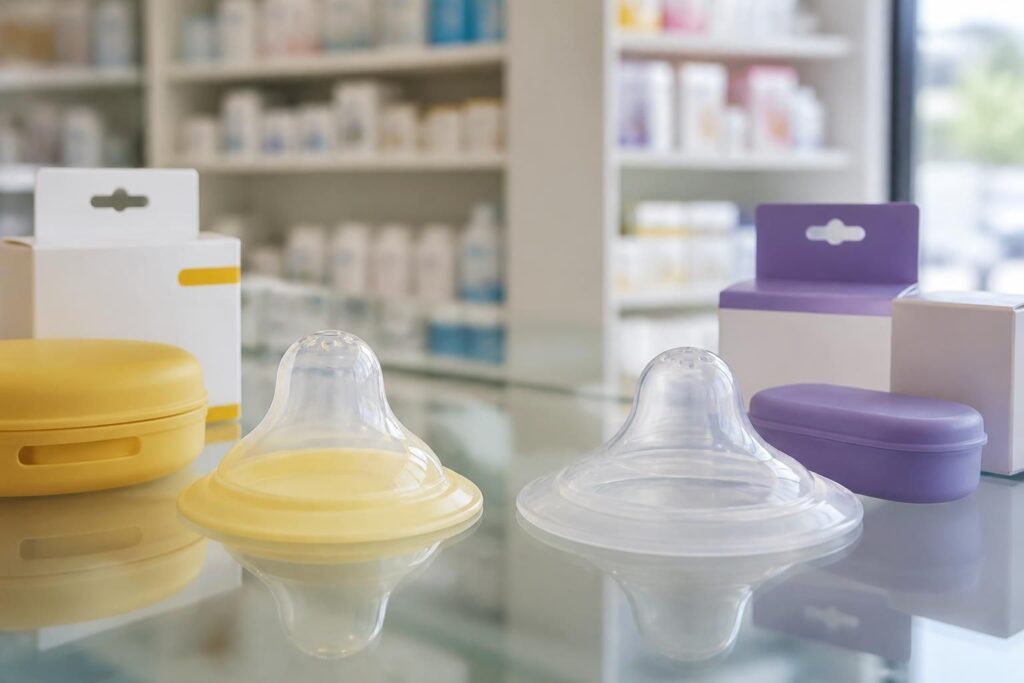
Breastfeeding is an intimate journey between a mother and her baby, filled with tenderness but sometimes also challenges. When latching onto the breast proves delicate, painful, or when the nipples are sensitive, using a silicone nipple shield can greatly facilitate this precious moment. Highly sought after in pharmacies, the Medela and Lansinoh models stand out due to their innovative design, combining thinness, flexibility, and optimal nipple protection. These accessories, while remaining discreet, offer genuine technical assistance to ensure comfortable breastfeeding, respecting the essential skin-to-skin bond between mother and infant. Based on criteria of safety, comfort, and efficiency, this comparison aims to enlighten parents in their choice while highlighting the usage conditions to prioritize for a serene and lasting breastfeeding experience.
In real life, what I see with children and their mothers is that every breastfeeding experience is unique. A little tip I often use is to remind of the importance of choosing a suitable nipple shield, as a poorly chosen size can quickly turn a helpful tool into a source of discomfort. Those pharmacy models, especially those by Medela and Lansinoh, offer BPA-free materials and shapes designed for better adaptation to morphology. Particular attention is given to ease of cleaning and durability, two essential criteria to preserve the health of both mother and baby. For families seeking gentle and effective solutions, understanding these differences and properly grasping usage rules becomes key to a fulfilling breastfeeding experience.
Nipple shield breastfeeding: essential review of the flagship Medela and Lansinoh models available in pharmacies
Often recommended during breastfeeding difficulties, the silicone nipple shield is a discreet ally that protects the nipples while helping the baby achieve a better latch. Medela offers the Contact model, which stands out for its ultra-thin design and flexible material, intended to mimic skin and promote natural contact. Lansinoh, meanwhile, emphasizes very soft medical-grade silicone combined with various sizes, thus facilitating adaptation to different morphologies and situations (flat nipples, cracks, prematurity).
In pharmacies, these two brands enjoy excellent feedback from users for their comfort and effectiveness. Support is especially appreciated when treating breast pain or when the baby’s suction is weak. These models also offer the advantage of being BPA-free and easy to sterilize, guaranteeing optimal hygiene and reducing the risk of infections.
Practical comparison: Medela Contact vs Lansinoh – key features
| Criterion | Medela Contact | Lansinoh |
|---|---|---|
| Material | Ultra-thin medical silicone, BPA-free | Soft medical silicone, hypoallergenic, BPA-free |
| Available sizes | 16 mm, 20 mm, 24 mm | 16 mm, 20 mm, 24 mm, 28 mm |
| Design | Thin shape that optimizes skin-to-skin contact | Wide and flexible collar for good support |
| Ease of maintenance | Cleaning with soapy water, steam sterilization or boiling | Same, compatible with standard sterilization |
| Allergy monitoring | Suitable for sensitive skin | Hypoallergenic, recommended in case of increased sensitivity |
| Additional accessories | Storage case included | Storage box and user guide |
The final selection thus depends on morphology and personal preferences. For example, for very wide nipples or long-term use, Lansinoh offers a larger size (28 mm), while Medela attracts with its ultra-thin feel, ideal to minimize the sensation of a foreign body.
Choosing the right size of nipple shield for optimal breastfeeding comfort
Choosing the size should never be taken lightly. The nipple shield must cover the nipple without compressing it, to avoid pain or irritation. An accurate measurement of the nipple diameter, often between 10 and 22 mm, guides the choice of the appropriate size:
- 16 mm: suited for thin or small nipples, often for young mothers or in case of prematurity.
- 20 mm: the average size that fits the majority of morphologies.
- 24 mm: for wider or slightly flattened nipples.
- 28 mm: mainly available with Lansinoh, recommended for wide nipples or specific situations.
Considering this step is fundamental to preserving breastfeeding comfort and ensuring effective nipple protection during feedings. A wrong size can quickly cause the nipple shield to slip or discomfort experienced by the baby, leading to stress and premature cessation of breastfeeding.
How to position and maintain your nipple shield to ensure harmonious breastfeeding
Careful positioning makes all the difference. Before each feeding:
- Moistening the surface of the nipple shield with a few drops of breast milk promotes adherence and activates the sucking reflex.
- Ensure the nipple is perfectly centered in the teat, adjusting the flange to touch the areola and guarantee an airtight seal without air bubbles.
- Observe the feeding to ensure effective suction and mutual comfort.
For maintenance, a thorough wash with warm soapy water after each use is essential, complemented by regular steam sterilization or boiling for 5 minutes. These actions preserve breast health and limit infection risk, especially in cases of breast candidiasis.
Specific uses and precautions for effective breastfeeding support
The nipple shield is not a gadget, but a real support device in particular situations, such as:
- Flat or inverted nipples: it helps to “present” them to the baby, facilitating the latch.
- Prematurity: improves fragile and disorganized suction.
- Breast pain and cracks: protects sensitive skin while allowing breastfeeding continuity.
- Mild tongue-tie: promotes adaptation to a correct latch despite limited mobility.
This device should always be used under the advice of a health professional to avoid baby dependency and encourage a gradual return to direct breastfeeding according to a personalized protocol. A caring and vigilant presence optimizes these stops in the breastfeeding journey, avoiding early breaks and strengthening the mother’s confidence.
Finding the path to breastfeeding often requires patience and fine tuning, like a creative workshop adjusting its colors and textures according to the day’s energy. The nipple shield, well chosen and used, thus becomes a faithful partner so that each feeding is a moment of shared tenderness between mother and child.
When is it advised to use a nipple shield for breastfeeding?
It is recommended in cases of flat nipples, severe pain, difficult latch, weak suction, or prematurity, always under the supervision of a health professional.
How to determine the right size of nipple shield?
Measure the nipple diameter, generally from 10 to 22 mm, then choose a suitable size to avoid compression or slipping, with a recommended fitting in the presence of a lactation consultant.
Can a nipple shield be used throughout breastfeeding?
Prolonged use without control can create baby dependency; it is advised to gradually reduce its use to return to direct breastfeeding.
How to clean and maintain a silicone nipple shield?
Wash with soapy water after each use, then regularly sterilize by steam or boiling to prevent infections.
Does the nipple shield reduce milk production?
Current models have little impact on lactation thanks to their thinness, but monitoring the baby’s weight is important to ensure good milk transfer.