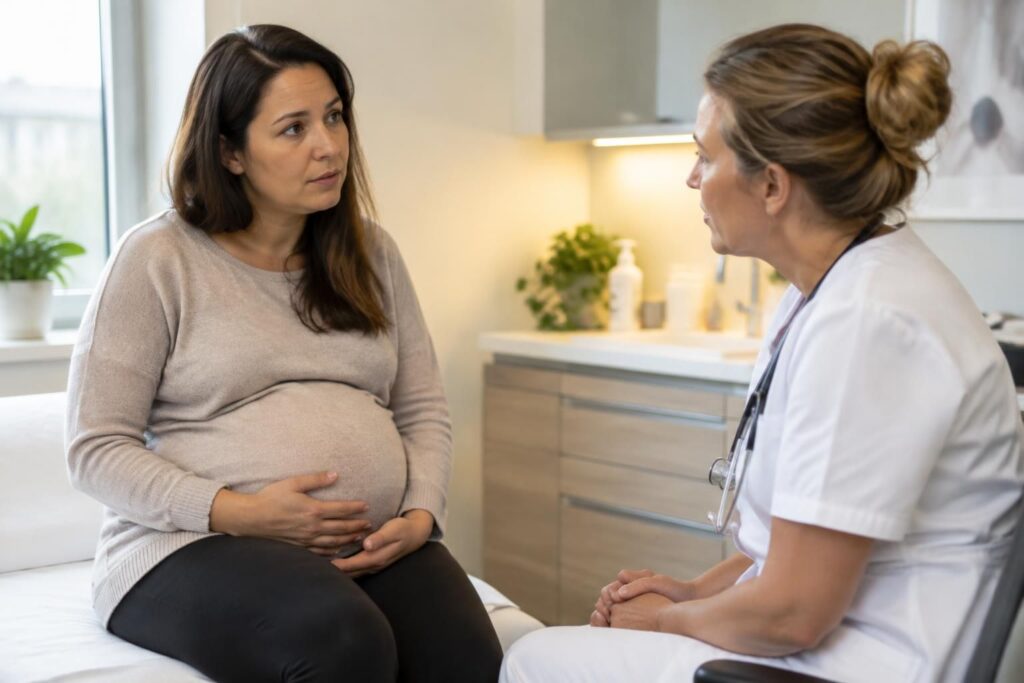
Lower abdominal pain during pregnancy can come as a surprise during a movement, after a long day, or without any obvious reason. Pulling sensations, heaviness, and mild cramps are common: the uterus is growing, the ligaments are stretching, and digestion slows down. Most often, these sensations are moderate, temporary, and ease with rest. They do not by themselves mean that a problem threatens the maternal or baby’s health.
However, certain signs require prompt action: intense, persistent pain or pain located on only one side, especially if accompanied by bleeding, fever, discomfort, or fluid loss. Burning when urinating, regular contractions, or decreased fetal movements also justify medical advice. The stage of pregnancy and symptom progression matter: unusual discomfort should be reported to the midwife, doctor, or maternity unit following the pregnancy. Here are concrete guidelines to distinguish often benign situations from worrying symptoms and know when to seek medical consultation or obstetrical emergency care.
In brief: mild, intermittent pain without other symptoms is often related to normal body changes. Consult promptly if the pain is sharp, persistent, or one-sided, or if it is accompanied by bleeding, fever, dizziness, fluid loss, burning urination, or regular contractions. In case of discomfort, very intense pain, or fluid loss, call the maternity unit or emergency services. For moderate discomfort, rest, hydration, and mild warmth can bring comfort, without replacing professional advice if the pain worries you.
Lower abdominal pain during pregnancy: often benign causes
The pelvis and abdomen adapt over the weeks. The uterus’s growth puts ligaments under tension, while changes in posture differently engage back muscles and the pelvic floor. These phenomena can cause brief pulling sensations, sometimes on the sides, especially when getting up quickly, coughing, or standing for a long time.
Digestion can also be involved. Under the effect of hormones, digestion slows down in some women: gas and constipation then create pressure or cramps sometimes mistaken for obstetrical pain. Digestive discomfort can last longer than a contraction and vary with meals or bathroom visits.
- Ligament pulls: often brief, triggered by a movement and relieved by resting.
- Gas or constipation: bloating, heaviness, or spasms, sometimes associated with slowed digestion.
- Posture and pelvic tensions: discomfort after prolonged standing or unusual activity.
- Braxton Hicks contractions: irregular tightening of the belly, usually without significant pain.
For example, a pregnant woman may feel a pinch when turning in bed, then feel nothing after a few minutes of rest. This brief and movement-related characteristic is rather reassuring in the absence of other signs, but any new or intensifying pain should be reported.
Abdominal pain in pregnancy: when to consult quickly?
Pain alone does not allow diagnosis. Its intensity, duration, location, and especially accompanying symptoms guide the course of action. Sudden, strong pain that persists or recurs regularly requires rapid medical advice.
At the start of pregnancy, one-sided pain combined with dark bleeding, dizziness, or discomfort requires urgent assessment, especially to rule out ectopic pregnancy. Shoulder pain accompanied by discomfort is also a warning sign. Bright red bleeding, particularly heavy or accompanied by pain like strong cramps, should be reported immediately to the medical team.
| Observed situation | What to do |
|---|---|
| Intense, sudden, persistent or very localized pain | Contact the maternity unit or emergency services without delay. |
| Pain with bleeding, discomfort, dizziness or shoulder pain | Request urgent evaluation; call 15 or 112 in case of significant discomfort. |
| Fever, burning when urinating, or back pain | Contact a professional rapidly: an infection must be identified and treated. |
| Clear or colored fluid leakage, continuous or sudden | Call the maternity unit immediately to know what to do. |
| Regular and painful contractions, or baby less active than usual | Contact the pregnancy care team without delay. |
A urinary infection may manifest as pain in the center of the lower abdomen, frequent urges to urinate, or burning sensations. Fever, chills, or lumbar pain increase the need for rapid consultation: only a professional can decide on appropriate tests and treatment for the pregnancy.
Lower abdominal pain during pregnancy according to trimester
First trimester: pulls and signs not to neglect
Sensations similar to mild menstrual cramps may occur at the beginning, as the body adapts. They are often moderate and not accompanied by other symptoms. However, marked one-sided pain, especially with bleeding or discomfort, should be evaluated quickly.
In case of pain and bleeding, do not try to determine their cause alone. The midwife or doctor can judge whether an examination, blood test, or ultrasound is necessary.
Second trimester: ligaments, digestion, and contractions
Ligament pain and digestive troubles remain common. Discomfort that appears after walking or a position change and eases with rest may be related to pelvic stresses. Pain without trigger, becoming regular or resembling strong cramps, should be reported to the care team.
Contractions may be felt from the second trimester. If painful, frequent, or repeated, especially before term, call the maternity unit rather than waiting for them to pass.
Third trimester: recognizing regular contractions
Braxton Hicks contractions are generally irregular and do not gradually become more intense. They may space out with rest or drinking water. Labor contractions tend to become more regular, closer together, and stronger, but sensations vary from person to person.
Fluid loss, bleeding, unusual pain, or decreased fetal movements require quick contact with the maternity unit. When in doubt, it is better to describe precisely what is happening than to try diagnosing yourself.
How to relieve mild lower abdominal pain during pregnancy?
If the pain is moderate, known, and without warning signs, a few simple gestures can improve comfort. A break, gradual position change, and regular hydration are good first steps. A gentle walk can help when discomfort seems related to digestion, provided that the activity is authorized during pregnancy follow-up.
Mild warmth, never hot, applied briefly can relax tensions. Some people also appreciate a pregnancy cushion between the knees or under the belly. If these measures do not relieve pain, if it returns, or changes nature, ask for advice from a midwife or doctor.
- Slow down and rest for a few minutes, then observe pain evolution.
- Drink regularly, especially if the day was active or it’s hot.
- Change position gently and avoid sudden movements.
- Try moderate warmth for a short duration, without a source too hot directly on the belly.
- Ask for advice before any medication. Paracetamol can be considered according to professional recommendations; avoid ibuprofen and other anti-inflammatory drugs without medical advice.
A small notebook can facilitate communication with the medical team: note the time, duration, intensity, location, and associated signs. These concrete markers help describe the situation without delaying a call when a worrying symptom appears.
A video may help better understand common sensations, but it does not replace an examination nor personalized instructions from the maternity unit. In case of doubt about an obstetrical emergency, contact a health professional directly.
When to call the maternity unit or emergency services during pregnancy?
Call the maternity unit if the pain becomes intense, persists, recurs at regular intervals, or is accompanied by bleeding, fever, fluid loss, or burning urination. In case of discomfort, sudden pain, or rapid worsening, call 15 or 112 in France. Do not wait for a scheduled appointment if symptoms seem unusual to you.
When you call, indicate the pregnancy term, the pain location, its intensity, how long it has lasted, and other present symptoms. If contractions occur, specify their frequency; if the baby moves less than usual, state it clearly. This information helps the team guide the care.
The right decision is not to guess the cause but to provide clear information to the team that knows your file. A medical consultation can sometimes simply reassure; when a warning sign is present, it mainly allows quick verification of the situation.
Frequently asked questions about lower abdominal pain during pregnancy
Is it normal to have lower abdominal pain at the beginning of pregnancy?
Mild pulling can accompany early pregnancy changes and is often harmless when it remains moderate and isolated. Significant pain, especially on one side or accompanied by bleeding, dizziness, or discomfort, requires rapid medical advice.
How to differentiate Braxton Hicks contractions from labor contractions?
Braxton Hicks contractions are generally irregular and do not progressively become more frequent or intense. Regular, painful, or tightening contractions should be reported to the maternity unit, especially before term.
What to do if lower abdominal pain is accompanied by bleeding?
Contact the maternity unit or the professional following the pregnancy quickly to describe the pain and bleeding. If the pain is intense, if you feel weak, or if you have discomfort, call 15 or 112.
Can you take medication for pain during pregnancy?
Ask a midwife, doctor, or pharmacist before taking any medication. Paracetamol can be considered according to received recommendations; do not take ibuprofen or other anti-inflammatory drugs without medical advice.