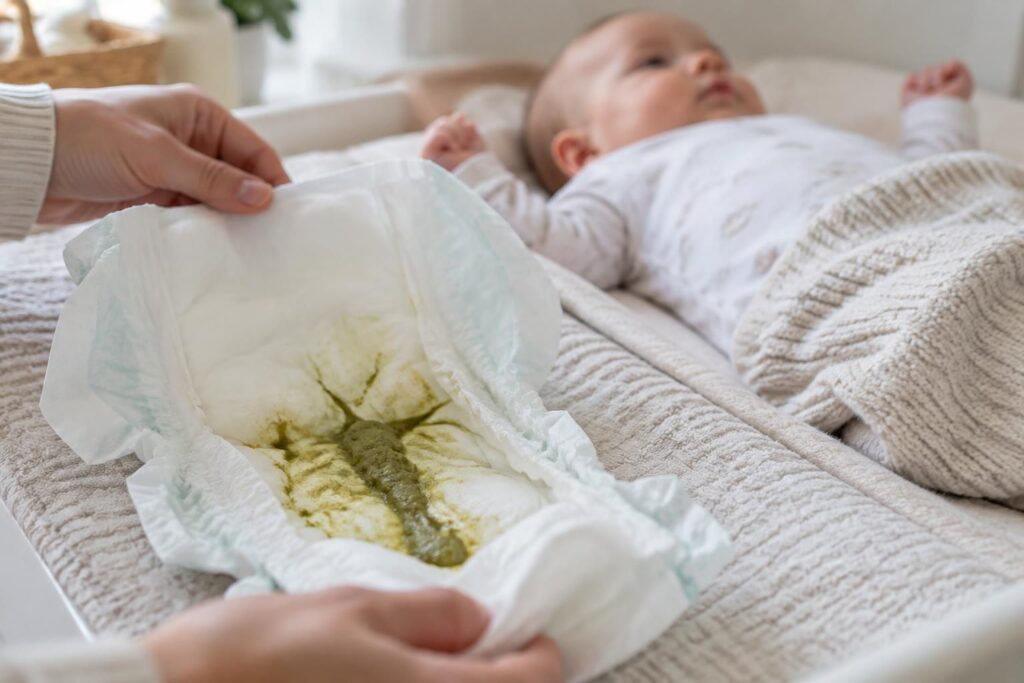
Discovering a greenish diaper can be surprising, especially when the cues are already changing a lot during the first months. However, baby green stools are often linked to a temporary variation in diet or transit, and their color, taken alone, is not enough to judge an infant’s health. Digestion evolves, milk can be enriched with iron, and the first vegetables sometimes color the stools: many changes that accompany the baby’s discoveries.
To understand what a diaper tells, it is better to look at the whole picture: the child’s age, diet, frequency and consistency of stools, but also behavior, appetite, and urine. Green stools in a baby who breastfeeds or takes a bottle as usual and seems healthy do not call for the same actions as unusual stools accompanied by fever, vomiting, or blood. Here are simple references to distinguish common variations from signals that deserve medical advice, without worrying about the first nuance.
In brief
- Baby stool color varies with age, milk, foods, and transit speed.
- The iron in some infant formulas and green vegetables can give a greenish tint.
- Color alone does not diagnose a problem: the baby’s overall condition also matters.
- Fever, repeated vomiting, blood, persistent very liquid stools, or signs of dehydration justify medical advice.
- When in doubt, it is better to seek advice rather than modify milk or diet alone.
Green stools in infants: why the color changes
Bile, a liquid produced by the liver that aids digestion, is naturally greenish. Along the baby’s intestinal transit, it usually transforms and contributes to the brown color of stools. If the passage through the intestine is faster, this transformation can be less complete: stools then keep a green tint.
Infant digestion is still maturing and its appearance evolves with feeding. Stools can also vary in texture and frequency from one child to another. An isolated greenish diaper, in a baby who is well, is often less informative than the combination of several signs.
Meconium, then the first variations
The first stools, called meconium, are very dark, often black with greenish reflections. They correspond to matter accumulated before birth and their appearance is different from the stools that will appear later with milk intake.
In the following days, the color changes. A breastfed baby often has yellow stools, sometimes lumpy, while those of a baby fed infant formula can be thicker and darker. These tendencies are not absolute rules: each infant has his or her own rhythm.
Causes of baby green stools: milk, foods and transit
Among the causes of green stools, some are linked to diet and do not signal disease by themselves. The iron present in some infant formulas or supplements can change the shade. After the introduction of solids, spinach, peas or green beans can also color stools.
A recent change of milk or diet can cause an adjustment period. A digestive infection, intolerance or medication are also possibilities, but these clues are evaluated based on symptoms and context, not on color alone.
| Appearance or context | Possible explanation | Practical reference |
|---|---|---|
| Green stools after a meal of green vegetables | Plant pigments from foods | Observe the evolution and the baby’s general condition |
| Green stools with iron-fortified infant formula | Possible influence of iron or milk composition | Do not change formula without professional advice |
| Green and more liquid stools | Accelerated transit, sometimes diarrhea | Monitor the frequency of wet diapers and seek advice if it persists |
| Green stools with fever or vomiting | A digestive disorder or infection is possible | Contact a health professional depending on symptom severity |
| Stools with blood, or white and discolored stools | Unusual appearance requiring evaluation | Request medical advice promptly |
Breastfeeding and green stools: what signs to keep in mind?
The stools of a breastfed baby can sometimes lean towards green. Frequency and consistency also change over the weeks, and the mother’s diet does not automatically explain a color variation. If the baby sucks effectively, seems alert, and wets diapers as usual, these elements are useful to share during follow-up, without jumping too quickly to a problem.
In case of repeated green stools associated with significant discomfort, poor feeding, or unusual weight development, the pediatrician or midwife can examine the situation. Breastfeeding and green stools are not necessarily signs of intolerance: the complete context helps clarify.
Infant formula and stools: why the tint can vary
With infant formula, the color can range from yellow to green or brown depending on the composition, especially the iron content, and digestion specifics. An acidified formula may also be associated with greener stools in some babies.
A change of formula should be discussed with a professional, especially if symptoms accompany it. Avoid successive changes to not multiply variations and help identify more easily what is going on.
When baby green stools require medical advice
A green stool alone does not necessarily indicate a disorder. However, association with a marked change of behavior or other symptoms deserves attention. An unusually sleepy, very irritable baby who drinks much less or vomits repeatedly must be evaluated by a professional.
Very liquid and abundant stools can cause dehydration, especially in very young children. Signs to watch include fewer wet diapers, dry mouth, great fatigue, or difficulty feeding. In the presence of blood, white or discolored stools, or black stools after the first days of life, seek medical advice promptly.
- Persistent fever or a baby who appears ill.
- Blood in stools, or white and discolored stools.
- Repeated vomiting, refusal to drink or significant apparent pain.
- Abundant or prolonged diarrhea, especially if diapers are less wet.
- Unusual fatigue, marked sleepiness or weight loss.
If the baby is very young, if his condition deteriorates, or if symptoms worry you, contact a professional or the appropriate emergency service without delay. In case of doubt, a photo of the diaper and notes on meals and symptoms can help describe the situation.
Supporting baby’s intestinal transit without multiplying changes
When the baby is well, a few simple markers are often enough. Note new foods, milk changes, stool frequency and appearance, as well as appetite and wet diapers for a few days. This little notebook helps spot a change and provides concrete information to the professional if a consultation becomes necessary.
During diversification, offer foods gradually, one by one, according to age-appropriate advice. Continue the usual milk and do not give medication, supplements, or extra drinks to treat stools without medical recommendation. For a baby under six months especially, water intake should follow the guidance of the professional caring for the child.
In a family, Lina, six months old, had greener stools after discovering peas. Her parents noted the change while observing that she ate and played as usual. This calm observation allowed them to ask a precise question during follow-up rather than changing several things at once.
Actions to avoid when the color surprises
Avoid judging the baby’s digestive health from a single diaper: color can change from day to day. It is also preferable not to stop breastfeeding, abruptly replace infant formula, or eliminate foods without professional advice.
If diarrhea appears, do not try to treat it with a food or homemade recipe. The baby’s age, symptom duration, and hydration guide the course of action: a professional can indicate appropriate measures.
Frequently asked questions about infant green stools
Are baby green stools always worrisome?
No. They are often related to iron in infant formula, green vegetables, or faster transit. The general state, diet, and associated symptoms matter more than color alone.
Can a breastfed baby have green stools?
Yes, a greenish tint can appear in a breastfed baby. It does not automatically mean the mother’s diet is problematic. Ask for advice if the change persists or is accompanied by other unusual signs.
Can infant formula change stool color?
Yes. The formula’s composition, especially its iron content, can influence color and consistency. Do not change it solely because of a green stool without consulting a health professional.
When to consult for green stools in an infant?
Request advice quickly if green stools are accompanied by blood, persistent fever, repeated vomiting, abundant diarrhea, reduced urine, or unusual fatigue. White or discolored stools also require medical advice.