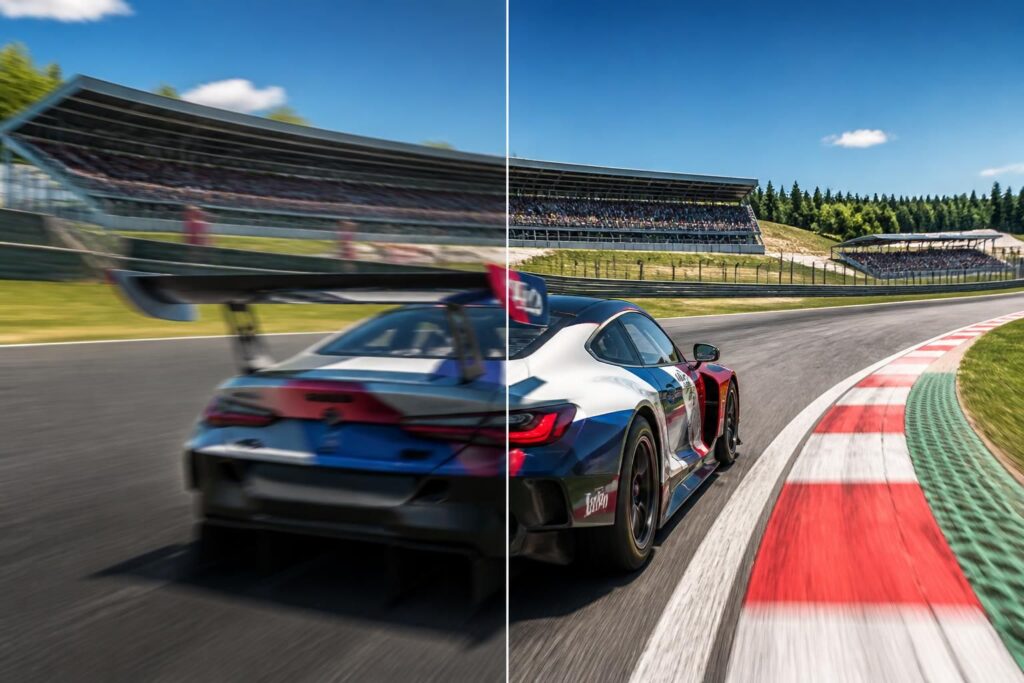
The roaring engine of Assetto Corsa has always attracted simulation enthusiasts, eager for pure sensations and maximum immersion. Yet, even the best-equipped can encounter slowdowns or graphical rendering that wavers between sharpness and loss of subtle details. This is where DLSS stands out as a true technological ally. This NVIDIA innovation offers, thanks to artificial intelligence, improved game fluidity while enhancing visual quality. So, how does this feature transform the experience on digitalized tracks? What benefits does it bring for resolution and especially how many additional fps? The stakes are high for gamers who want to combine pure performance and visual pleasure, without compromise. From the very first corners, DLSS distributes its benefits with a new brilliance, promising to elevate Assetto Corsa to the podium of video game experiences in 2026.
To better understand this tool, it is useful to specify that fluidity and graphic quality often go hand in hand, or bitterly compete in the world of graphic rendering. To maintain a beautiful image at high resolution, the necessary resources can slow down the action, causing stutters in the race for framerate. DLSS then asserts itself as a precious optimization lever, capable of revisiting the display based on intelligent calculations. It is not simply a gimmick, but rather a key that opens the door to a more responsive and pleasing game to the eye, especially when combined with refined settings adapted to each graphics card from the RTX generation onwards and the constant improvement of drivers.
- DLSS accompanies Assetto Corsa by significantly improving fluidity via optimized rendering thanks to AI, essential for demanding players.
- Graphic settings, notably in Quality or Performance mode, allow adjustment of this fps gain while preserving good visual fidelity.
- Comparison between anti-aliasing and upscaling methods: DLSS stands out for a better balance between sharpness and fluidity compared to FSR, TAA, FXAA, or KTAA.
- The graphics card strongly impacts the experience: an RTX 3080 Ti with DLSS in Assetto Corsa offers a tangible advantage in 4K, while RX cards benefit more modestly from FSR.
- DLSS does not degrade quality, quite the opposite, with a clear reduction in ghosting and often a more precise image on complex details like the crowd and fences.
DLSS in Assetto Corsa: a revolution for smoothness on the virtual track
Who has never faced stutters ruining the race, despite a well-built PC? Assetto Corsa gains a new dimension with the integration of DLSS 2.2.15, finally arrived after a long wait. This technology significantly increases frames per second without sacrificing details. For example, on an RTX 3080 Ti, switching to DLSS can boost fps from 110 to 130 in QHD, a more than welcome acceleration to feel the track vibrate under your wheels. This gain is not trivial since it combines with better overall sharpness, and even elements like safety fences appear more precise.
Artificial intelligence then comes into play to recalculate certain pixels and give the illusion of a higher native resolution, without the usual heaviness. It’s a bit like an invisible mechanic adjusting settings in real-time, for a smoother and more efficient experience. What makes this process even more remarkable is its ability to preserve graphic quality, which is essential for an ultra-realistic simulation where the eye is always seeking the slightest detail.
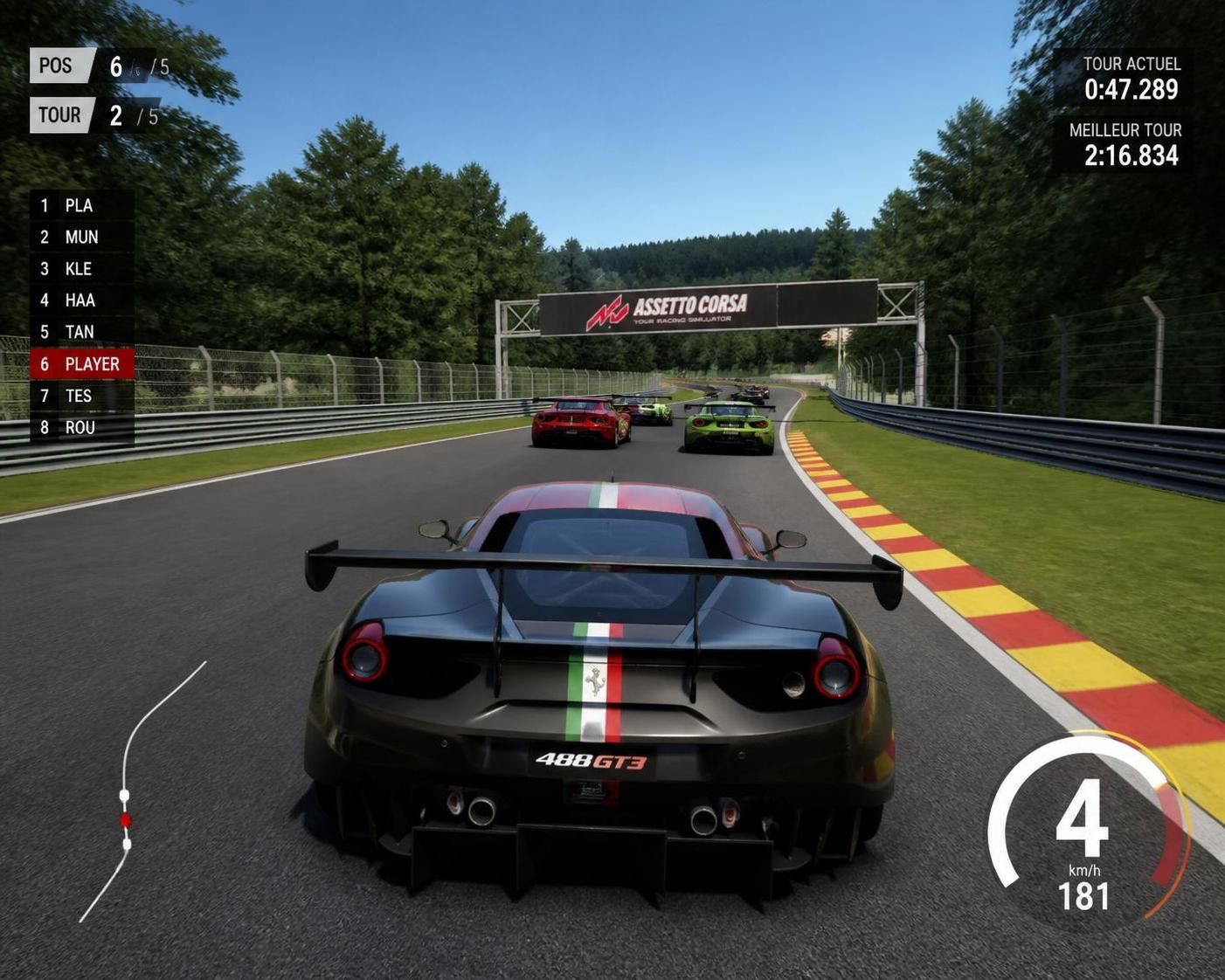
Graphic settings adjusted to get the best out of DLSS
In the bustling world of graphic options, finding the ideal setting for Assetto Corsa is often a constant challenge. Fluidity depends as much on visual choices as on machine power. Choosing DLSS in ‘Quality’ mode can preserve good fidelity, while the ‘Performance’ mode is wise for those who want to maximize the number of fps. The key is compatible hardware like NVIDIA RTX cards, which are recommended especially for high resolutions.
To optimize even further, it is important not to overlook effects like anti-aliasing. KTAA, developed by the game creators, limits the ghosting problem sometimes caused by classic TAA. This latter artifact, a sort of ghost blur, greatly reduces visual pleasure in fast corners. By combining DLSS with good anti-aliasing and adjusting the resolution according to the setup, you can enjoy Assetto Corsa in its finest form without sacrificing responsiveness.
- Activate DLSS by selecting ‘Quality’ or ‘Performance’ mode according to your needs.
- Favor KTAA for a sharp rendering, especially in fast-moving areas.
- Adjust the resolution to balance fluidity and detail, particularly in 4K.
- Watch energy settings in the NVIDIA panel to avoid performance drops.
- Regularly update drivers to benefit from the latest optimizations.
Comparison of image enhancement technologies in Assetto Corsa
| Technology | Rendering quality | Effect on ghosting | Average fps gain |
|---|---|---|---|
| DLSS 2.2.15 | Excellent sharpness (crowd, fences) | Very low, clean images | +15% to +20% depending on resolution |
| FSR Ultra Quality | Good, slightly smoothed details | Low | +13% to +18% |
| TAA | Good overall quality | Visible ghosting | No gain |
| KTAA | Precise on contours and foliage | No ghosting | No gain |
| FXAA | Smoothed details | Few artefacts | No gain |
In real life, what I see with children is the importance of a good balance between performance and quality. On the track, the principle is the same: DLSS gives a real boost to fluidity but does not mask the importance of other settings, especially to limit artefacts like ghosting.
Graphics cards facing DLSS in Assetto Corsa: which setup for what result?
The choice of graphics card is fundamental to getting the most out of this tool. Tests conducted on setups including a Core i5-12600K with an RTX 3080 Ti or an RX 6900 XT reveal significant gaps. In Full HD, DLSS offers a slight advantage to the RTX, but it is truly in QHD and UHD that the difference widens, with gains nearing 20% on the RTX. Meanwhile, the RX holds its own by benefiting from FSR, but remains more modest for ultra-high definitions.
This hierarchy clearly shows the priority to be given to NVIDIA cards compatible with DLSS for a truly optimized gaming experience on Assetto Corsa. Nevertheless, even mid-range setups benefit from significant optimizations in 2026, ensuring an enhanced experience without huge expenses.
In short, playing with a suitable setup and mastering the settings opens the way to increased sensations, a more pleasant graphic environment, and above all, fluidity that does not falter at key moments in races.
Some practical tips for perfect optimization
- Choose the DLSS mode according to your hardware and preferences (Quality vs Performance)
- Adopt KTAA for a sharp effect without aliasing or ghosting
- Play with native resolution to balance performance and rendering
- Monitor 1% low fps to detect fluidity drops
- Regularly update NVIDIA drivers to benefit from all optimizations
To go further, it is interesting to take a look at other optimization technologies in the video game world, notably AMD’s FSR 3. This solution, extensively detailed in this dedicated article, also brings its share of improvements for owners of non-NVIDIA cards, offering a broad field of action depending on configurations.
If you are curious about consoles and new innovations around video gaming, especially those that could align with these technologies, don’t hesitate to also explore the latest news on the Switch 2 to anticipate market developments.
Does DLSS degrade visual quality in Assetto Corsa?
No, DLSS even improves sharpness and reduces ghosting effects, especially in ‘Quality’ mode. Very limited smoothing tendencies.
Which DLSS setting to prioritize for Assetto Corsa?
‘Quality’ mode is a good compromise, while ‘Performance’ favors maximum fps if your hardware is more modest.
Can I combine DLSS with other types of anti-aliasing?
Yes, notably with KTAA which limits ghosting without losing sharpness.
FSR or DLSS: which is the better option?
DLSS wins on NVIDIA cards due to its quality and efficiency, while FSR remains a good alternative for AMD hardware.
Is DLSS accessible to mid-range setups?
Absolutely, performance gains are visible even on less powerful graphics cards, making Assetto Corsa smoother without large expenses.