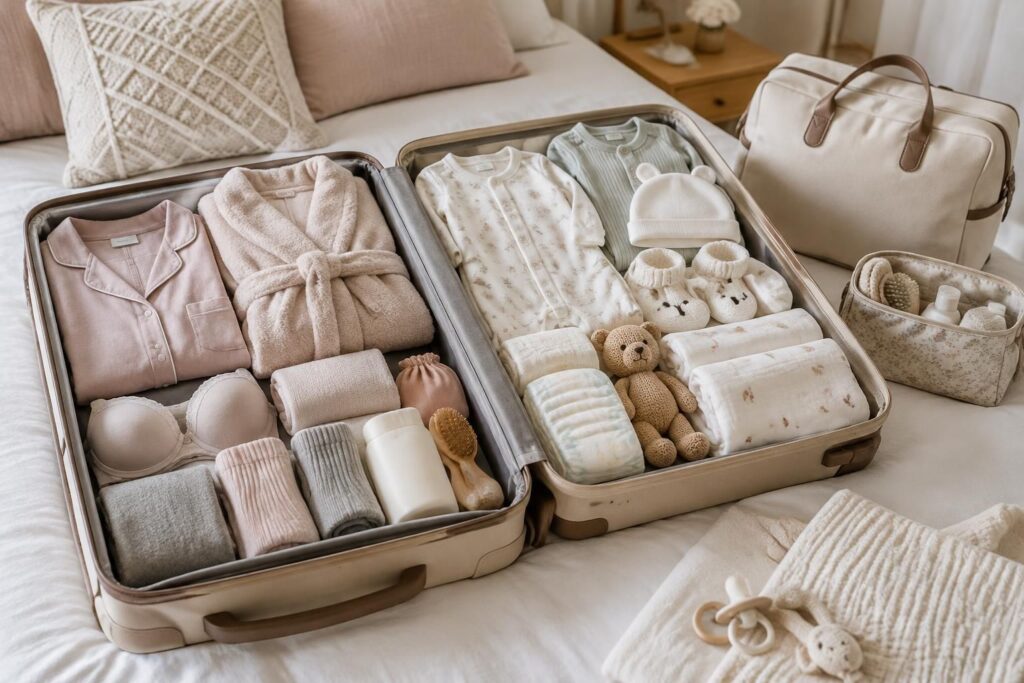
Preparing a maternity bag means embracing a significant encounter while also thinking about the little details that make the stay more comfortable. A few easy-to-put-on clothes, essentials for first care, and useful documents can be gathered without filling three bags: the key is to distinguish what will be used in the delivery room from what will be useful later, in the room.
For Lina, who is expecting her first baby, the trigger was to prepare two separate bags and check her maternity ward’s instructions. This simple organization allowed her to quickly find a baby onesie and her administrative documents, even when contractions started earlier than expected. Since each facility has its own habits, the maternity list benefits from being adapted to the team’s recommendations and the probable length of stay.
In brief: preparing the maternity bag without complicating anything
- Prepare a bag for the delivery room with immediately useful items, then luggage for the stay.
- Gather items for mom: comfortable clothes, suitable protection, toiletry bag, and charger.
- Choose items for baby according to the season, especially a few easy-to-put-on newborn clothes.
- Put administrative documents in an accessible pouch and verify the maternity’s requirements.
- Prepare the bags a few weeks before the due date, then calmly adjust them with the midwife.
Useful preparation is not a perfect bag: it is a reassuring point of reference, easy to adapt on D-day.
Maternity bag: separate the delivery room bag from the stay luggage
The delivery room bag contains the essentials at hand during labor and the first hours with baby. A small bag often suffices: comfortable outfit, spray if desired, socks, water bottle according to local guidelines, and the newborn’s first outfit.
The main luggage can stay in the room or car until the right moment. This separation avoids rummaging through the whole bag to find a onesie or pair of booties. To keep things clear, Lina placed the birth items in a clearly identifiable pouch, then asked her companion to locate the rest of the bag before departure.
Preparation for childbirth is also an opportunity to ask the midwife what the maternity already provides, such as certain care products or linens. A few minutes of checking can prevent bringing duplicates.
By separating the immediate from the rest of the stay, each item more easily finds its place at the right time.
Items for mom: comfort, toiletry, and small essentials
For items for mom, favor soft, loose, and easy-to-put-on clothes. Plan for several comfortable tops, an outfit for leaving, underwear suited to your preferences, and non-slip slippers; the quantity will depend on the length of stay and laundry possibilities at home.
The toiletry bag can be light: toothbrush, toothpaste, usual soap or cleansing gel, hairbrush, elastics, and lip balm. Add personal products you usually use, as well as a towel if recommended by the facility. For breastfeeding, a suitable bra or pads may be practical, though not essential for everyone.
A phone charger, a water bottle, and some change of clothes for the companion often complete the essentials. For concrete ideas about family life, you can also browse these resources intended for parents. The good guideline: take what brings comfort, rather than everything that might possibly be needed.
Items for baby: newborn clothes and care essentials to prepare
Items for baby are easier to organize in small complete outfits. Plan several onesies, pajamas, a cardigan or sweater, socks, and an outfit for going home appropriate to the weather. Sizes vary from one newborn to another: a few newborn clothes and, if desired, one size up offer some leeway without overloading the bag.
Choose clothes easy to open, with snaps or a practical closure. The first diaper changes may feel a bit daunting; simple cuts make the task calmer. A complete outfit, placed in a pouch, can be reserved for leaving the maternity ward.
Regarding baby care products, it’s better to follow the facility’s recommendations and ask what is provided. Needs are generally limited at the start: diapers if requested by the maternity ward, some cotton pads or wipes as instructed, and possibly a product recommended by a professional. A newborn’s comfort often depends on little things: soft clothing, appropriate temperature, and available arms.
Simple outfits adapted to the season make the first diaper changes easier, without turning the bag into a miniature wardrobe.
Practical maternity list: documents, quantities, and organization
Keep administrative documents in an easy-to-grab pouch: identity card, health insurance card or certificate, mutual insurance card, pregnancy record, and results or documents requested by the maternity ward. The exact list may vary depending on the facility; a call or checking their website allows verifying instructions before closing the bag.
Here is a guideline table to adjust according to length of stay, season, and your maternity’s habits.
| To prepare | Practical guidelines | To verify |
|---|---|---|
| Delivery room bag | Baby’s first outfit, comfortable clothes, small useful objects | What is allowed or provided in the delivery room |
| Items for mom | Loose outfits, underwear, slippers, toiletry bag | Estimated length of stay and available linens |
| Items for baby | Several onesies and pajamas, sweater, socks, outfit for going home | Season, sizes, and requested care products |
| Documents | Identity card, health insurance card, pregnancy record | Official maternity list |
| Going home | Appropriate outfit and installed car seat if the trip is by car | Installation of the seat before departure |
A little organizational tip: slipping a checklist on the bag helps the companion quickly find the useful items. To complete your parenting references, also discover other advice for the first family steps. A short list, reviewed with the medical team, is better than a bag filled at random.
When to prepare the maternity bag and how to adapt it
The bag can be started a few weeks before the expected date, following the schedule advised by the midwife or maternity ward. A first preparation helps identify what is missing; a final check can then focus on documents, charger, and going-home clothes.
To avoid last-minute purchases, first gather what you already have at home and tick items off as you go. If the family hesitates about quantities, it is better to prepare a few easy-to-wash changes or to supplement them through a relative than to search for a universal rule: each stay and each baby has their own rhythm.
On the day of departure, the bags can wait near the door, with visible documents and the car seat ready if necessary. This organization leaves more room for the essential: moving forward step by step and welcoming baby without looking everywhere for a small pair of socks.
Frequently asked questions about the maternity list
When should you prepare your maternity bag?
Start it a few weeks before the expected date, following your midwife’s or maternity ward’s recommendations. Keep papers and daily essential items accessible for a final check.
How many newborn clothes should you bring?
Plan several onesies and pajamas, as well as a cardigan, socks, and an outfit for going home. Adjust quantities to the expected length of stay, the season, and the facility’s indications.
Should you bring baby care products?
Ask the maternity what it provides and what it wants you to bring. Needs in the first days are often limited; it is better to follow the team’s instructions than multiply products.
Which administrative documents should be put in the bag?
Gather especially an identity card, your health insurance card or certificate, your mutual insurance card, and the pregnancy record. Check the exact list with your maternity as requests may vary.