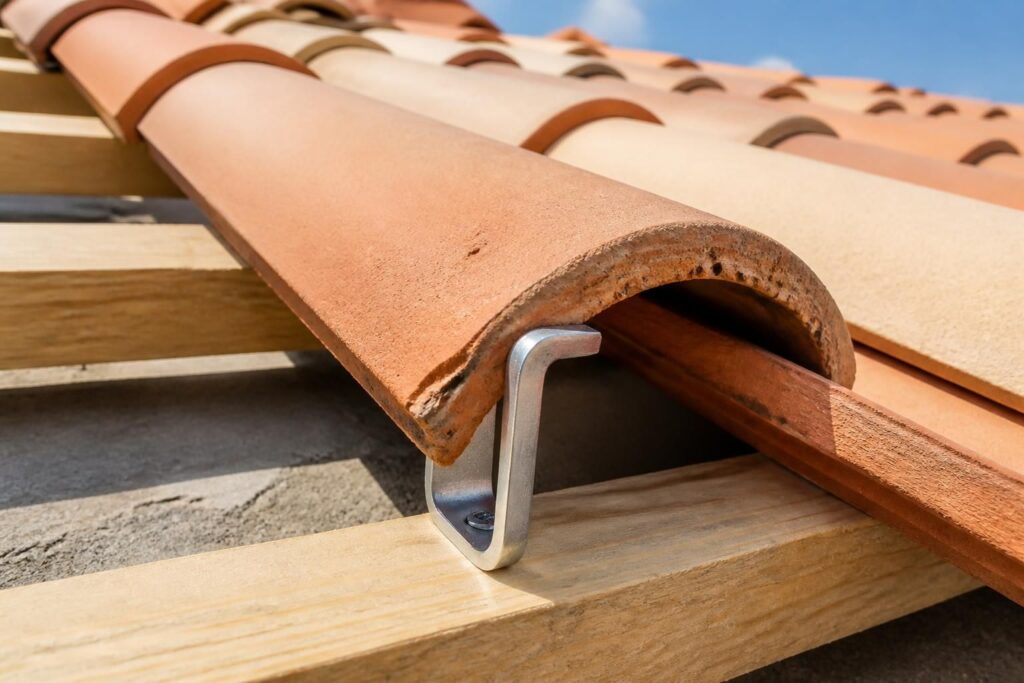
Choosing a hook for canal tiles is not limited to a simple technical gesture; it is a real lever that transforms the installation of your roof. In 2026, this specific fastening is established as a key element in securing the tiles on a pitched roof. Far from being a detail, the hook ensures stability against the whims of the wind and weather, while optimizing the waterproofing and durability of the roof. It is equipment designed to perfectly adapt to the particular shape of canal tiles, which are commonly used especially in southern regions.
The installation steps for these hooks, although methodical, offer a considerable time saving when followed precisely. By associating the hooks with the battens, they guarantee perfect support of the tiles, limiting the risks of slipping or lifting. This technique also promotes better resistance to climate variations: rain, strong wind, snow. Thus, the choice of material between galvanized steel, stainless steel, or reinforced plastic becomes a real factor of longevity and efficiency. Beyond technical considerations, this method facilitates future maintenance, a crucial point for preserving the roof without increased difficulty.
In real life, what is often observed among artisans and owners who adopt this fastening is a formidable ease of installation that sacrifices nothing to safety or aesthetics. From efficiency on site, the hook for canal tiles stands as a reliable, durable, and adapted solution to the current needs of canal tile roofs.
- Ensures solid and durable fastening of canal tiles
- Improves waterproofing and resistance to weather
- Reduces installation time by up to 80% according to innovations
- Allows easier long-term maintenance
- Adapts to different tile types and regions
Understanding the role of the hook for canal tiles in roof installation
The hook for canal tiles plays an essential role in roof installation. It serves to firmly hold the tiles on the framework via a batten system. Contrary to more traditional methods that left the tiles simply resting without fastening, the hook now prevents any risk of displacement or lifting caused by wind or weather. This fastening is mainly designed for canal tiles, recognizable by their gutter shape which facilitates water flow. The specificity of the hook is to fit this shape to ensure perfect waterproofing of the roof, a concern frequently encountered by homeowners in maintaining their house.
The wise choice of a hook relies on knowledge of the material, as it must resist corrosion while being flexible enough to adapt to the mechanical constraints of the roof. In 2026, the galvanized steel option remains an excellent compromise for its robustness and reasonable cost, while stainless steel appeals for its maximum long-term resistance, despite a slightly higher price. For tighter budgets, reinforced plastic offers a lightweight alternative, but with reduced durability.
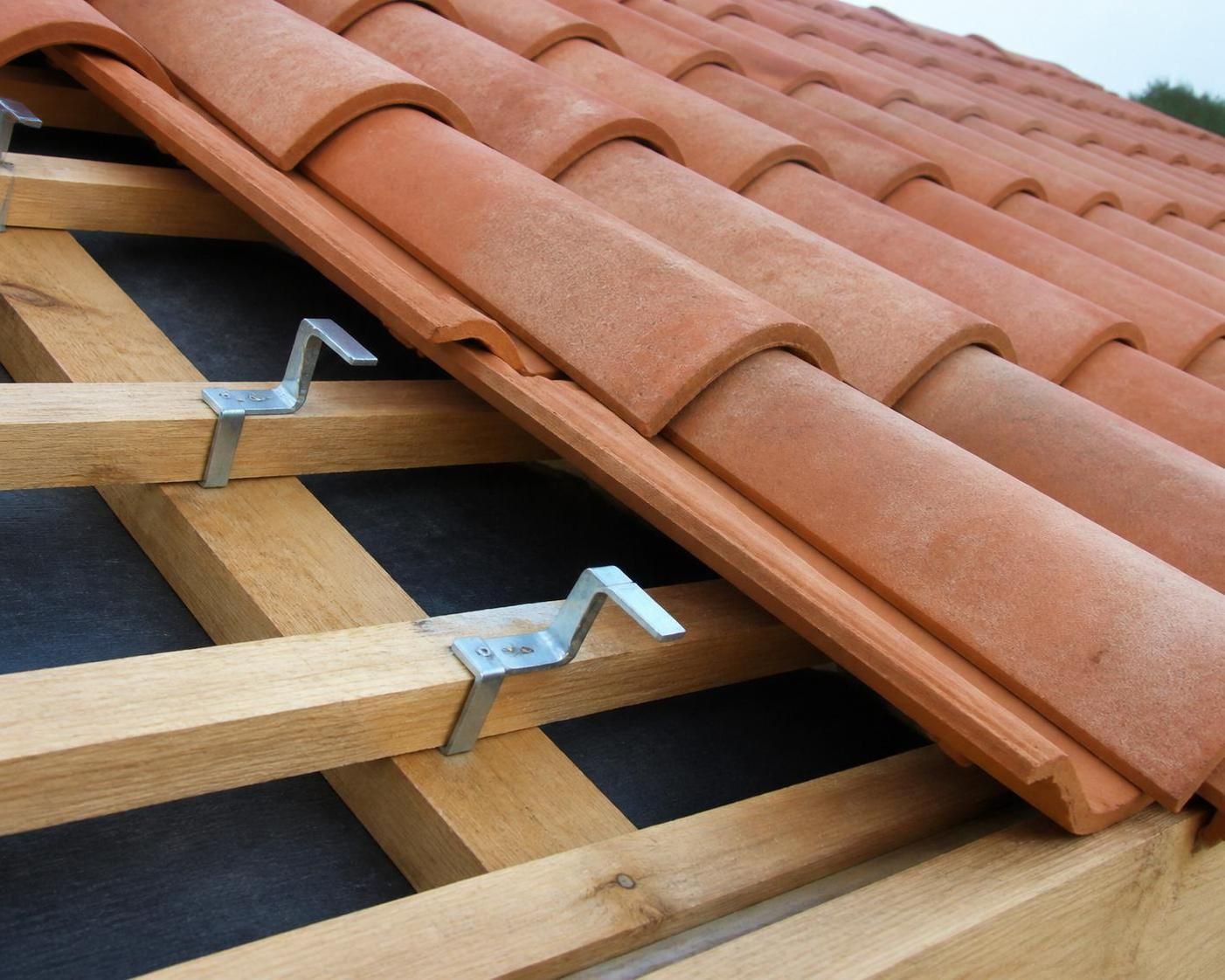
Key steps for a roof installation with adapted hooks
When observing the installation of a roof using hooks for canal tiles, several clear phases emerge:
- Preparation of the support: cleaning and checking the state of the framework ensure a healthy base for fastening.
- Installation of battens: they are installed horizontally and spaced regularly between 30 and 40 cm according to manufacturer instructions.
- Fixing the hooks: precisely aligned on the battens, they must be screwed using stainless screws to avoid any corrosion.
- Installation of tiles: starting with the bottom row, each canal tile is placed and hooked securely onto the hook.
This method guarantees not only installation ease but also quality and long-term safety of the roof. A little tip I often use during creative workshops: imagine each hook as a small guardian of the roof, ensuring that nothing moves even under the strongest gusts of wind.
Materials suitable for tile fastening and their impact on roof durability
The material of the hook directly affects the lifespan and reliability of the fastening. The table below summarizes the advantages and disadvantages of the main materials used:
| Material | Advantages | Disadvantages | Estimated lifespan | Approximate unit price (€) |
|---|---|---|---|---|
| Galvanized steel | Good corrosion resistance, economical | May corrode over time in very humid environments | 15 to 20 years | 0.80 – 1.20 |
| Stainless steel | Excellent durability, maximum resistance to weather | Higher price | Up to 30 years | 1.50 – 2.00 |
| Reinforced plastic | Lightweight, economical | Less resistant, suitable for less exposed areas | 5 to 10 years | 0.30 – 0.50 |
Some tips to optimize roof installation and maintenance
A successful installation goes beyond the initial setup. Regular maintenance of the fastening system is essential to keep a roof in good condition:
- Visually inspect annually the state of the hooks and replace them if signs of corrosion appear.
- Regularly clean the roof to eliminate moss, algae, and debris that could damage the fastenings.
- Respect recommended spacing between hooks to avoid deformation or displacement of tiles.
- Call a professional in case of doubt or for complex roofs to ensure optimal waterproofing.
How does the hook installation technique improve tile securing?
By installing a specific hook, each canal tile is given true mechanical support. This fastening prevents nuisances such as sliding or lifting, which can compromise the roof’s waterproofing. Imagine a strong wind that, without this system, could lift several tiles at once, exposing the framework to water infiltration. The hook acts as a discreet but effective lock, stabilizing the covering.
Recent innovations, such as Croch’Tuile developed by Dimos, demonstrate the importance of this fastening. These universal hooks adapt to the majority of interlocking tiles, allow installation without tools, and withstand extreme winds over 260 km/h. This system revolutionizes roof installation by offering a quick, reliable assembly while keeping costs very affordable, under 1% of the roofing price.
In this context, choosing the right hook is not only a practical choice. It is also a gesture that commits to the longevity of the roof and the protection of the home, with a direct impact on the overall performance of the dwelling.
Canal tile roof installation: an art eased by adapted hooks
Throughout the history of construction, the canal tile has always exercised a particular charm in the landscapes of southern France. Its installation, once complex and sometimes fragile, now gains robustness thanks to fastening by specialized hooks. These prolong the life of the roof while offering a clean and homogeneous aesthetic. It is a real relief for artisans who, in real life, notice a significant reduction in installation time and better comfort during interventions on the roof.
For a homeowner wanting to start roof installation, it is easy to follow the advice of manufacturers and professionals. The material, installation technique, and respect for standards guarantee a durable result. A little tip often given during creative workshops: treat this step like a puzzle, each hook must perfectly find its place so that the whole is harmonious and functional.
What is the average lifespan of a hook for canal tiles?
It varies depending on the material: up to 30 years for a stainless steel hook, and around 15 to 20 years for galvanized steel.
Can you install a hook for canal tiles yourself?
Yes, if you have some DIY and roofing knowledge, but it is advisable to call a professional to ensure quality and safety.
Which material to choose for hooks depending on the region?
Galvanized steel is suitable for humid areas, stainless steel is suitable for exposed and salty environments, while reinforced plastic is used for less aggressive zones.
How to guarantee the waterproofing of the roof with these hooks?
By respecting the recommended installation technique, especially the spacing of the hooks, and ensuring good overlapping of tiles.
Are the hooks compatible with all tiles?
Each model is specific to the shape of the canal tile used. Therefore, you must choose hooks adapted to your tile type.